Kalshi Wash Trading Allegations Put Trading Volume Under Scrutiny

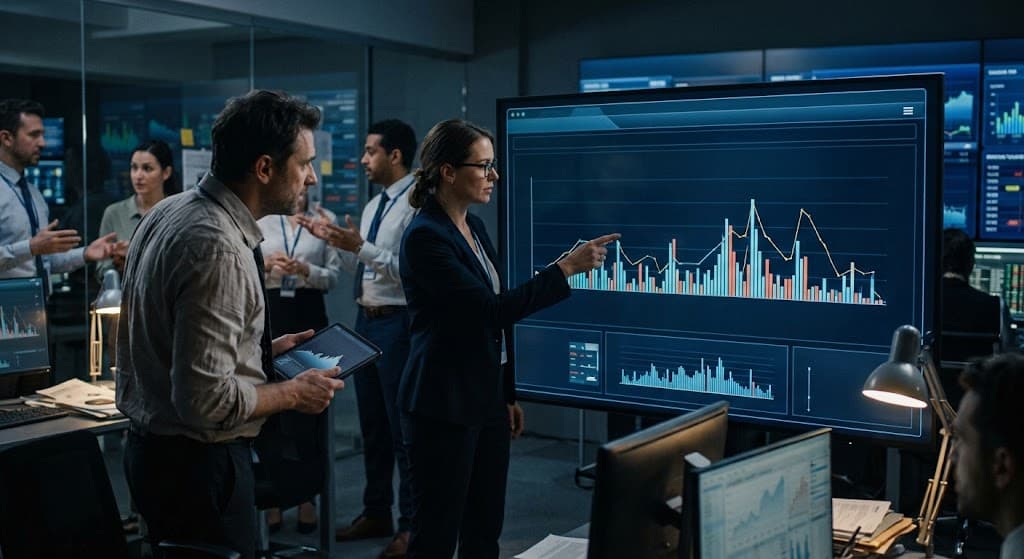
Late on Sunday night, while the rest of the financial world was asleep, an independent data researcher published a thread on X that sent shockwaves through the prediction market and derivatives community.
The author began with a chilling disclosure: knowing how fast embarrassing trading logs tend to vanish from public APIs once an exchange realizes it has been caught, the researcher downloaded the complete raw transaction books and encrypted them across three separate cloud storage providers.
The claim was bold, direct, and devastating: Kalshi, the self-proclaimed squeaky-clean, federally regulated exchange, has been systematically faking its trading volume.
This was not an accusation of subtle statistical anomalies or complex financial engineering.
It was an exposure of the clumsiest, most blatant wash-trading patterns ever observed on a licensed American exchange.
The evidence laid out across the data is jaw-dropping:
On Ethereum perpetual contracts, the exact same trade size of $5,500 printed over and over like clockwork, accounting for an absurd 48% to 58% of all daily ETH volume across four separate twenty-four-hour sessions.
On an obscure political prediction market tracking the 2028 Democratic presidential nomination, an automated script bought and sold 1 worth of contracts every two seconds without stopping, artificially generating over 2,000,000 in phantom volume between August 1 and September 19.
Similar programmatic patterns of repetitive, circular trading were identified bleeding across sports contracts, parlays, and Federal Reserve interest rate markets.
I spent the entire night pulling the public trade logs, verifying the timestamps, and consulting former institutional compliance officers.
What follows is the forensic breakdown of the data receipts, the toxic incentive structures pushing market makers to fake liquidity, and the legal reality of what happens when a federally licensed financial exchange gets caught running a phantom volume factory.
The Smoking Gun on Ethereum Perpetuals
In real financial markets, trade sizes are messy, diverse, and unpredictable.
On any given morning, an Ethereum market is hit by retail traders buying twenty dollars worth of exposure, automated bots taking fifty-dollar scalps, institutional desks executing twenty-thousand-dollar hedges, and whales moving hundreds of thousands of dollars.
When you chart the distribution of trade sizes on a healthy exchange, you see a natural bell curve:
Trade Size | Relative Frequency | Description |
|---|---|---|
$10 | Very High | Micro trades; dominate by count, driven by retail users, bots, and algorithms. |
$100 | High | Common small trades; mix of casual traders and automated strategies. |
$1,000 | Moderate | Mid-size trades; fewer in number but significant in volume. |
$10,000 | Low | Larger trades; typically institutional or high-net-worth participants. |
$100,000 | Very Low | Whale trades; rare by count but move markets and liquidity. |
Now look at what the researcher uncovered when inspecting Kalshi’s Ethereum perpetual market data.
The natural distribution curve disappears entirely. In its place sits a single, artificial spike that repeats with mechanical precision: $5,500.00.
KALSHI'S ETH PERPETUAL TAPE (FOUR RECORDED SESSIONS):
14:02:11 UTC | BUY | $5,500.00 | Executed
14:02:14 UTC | SELL | $5,500.00 | Executed
14:02:17 UTC | BUY | $5,500.00 | Executed
14:02:20 UTC | SELL | $5,500.00 | Executed
------------------------------------------------------
Result: A single identical ticket size generates
48% to 58% of the platform's entire daily volume.
Think about how ridiculous that number is.
Across four distinct trading days, this single $5,500 lot size accounted for more than half of the total trading volume on Kalshi’s entire Ethereum perpetual product.
It was not a human trader. No real-world investor sits at a terminal entering $5,500 orders every few seconds for twenty-four hours straight.
It was an automated execution algorithm trading with itself, buying and selling the exact same lot size back and forth across the spread to create the optical illusion of deep, active liquidity.
As the researcher pointed out with biting sarcasm: if an exchange is going to manufacture fake volume, the first rule of deception is to randomize your trade sizes. Running the exact same $5,500 ticket over and over is the digital equivalent of a bank robber leaving their driver's license on the teller's counter.
The $2,000,000 Mamdani Illusion
If the Ethereum perpetual data exposed programmatic sloppiness, the prediction market data revealed pure absurdity.
Consider the market tracking whether Zohran Mamdani, a New York state assemblyman, will become the Democratic nominee for president in 2028.
In any rational financial universe, an obscure, low-probability political contract four years away from an election should see a few thousand dollars of casual retail interest per month.
Yet, when you look at the historical trade tape between August 1 and September 19, you discover an astounding transaction loop:
THE MAMDANI METRONOME SCRIPT:
- Frequency: Exactly one trade every two seconds.
- Order Size: Exactly $1.00 per transaction.
- Duration: Ran continuously for 50 days straight.
- Total Manufactured Volume: Exceeding $2,000,000.
For fifty consecutive days, a script sat inside Kalshi’s matching engine, purchasing a single dollar of the contract, selling a single dollar of the contract, and repeating the cycle thirty times every single minute, seven hundred and twenty times every hour, seventeen thousand times every day.
By the time the script finished its run on September 19, it had fabricated over two million dollars of trading volume on a single political contract.
Anyone who visited Kalshi’s website saw a market boasting high liquidity and multi-million-dollar traction. Retail users looking at the statistics assumed the contract was being actively debated and traded by thousands of political junkies across the country.
In reality, the entire market was a ghost town inhabited by a single automated script trading single dollar bills back and forth with its own reflection.
Why Market Makers Cheat
Why would anyone go to the trouble of running an automated script to trade five-thousand-dollar perpetuals or one-dollar political contracts millions of times?
The answer lies in the dark, unpublicized economic agreements between venture-backed exchanges and institutional market-making desks.
To understand why this happens, you must look at how modern exchanges raise capital and court institutional partners:
THE PHANTOM VOLUME FACTORY:
1. Exchange needs high volume metrics to justify billion-dollar VC valuations.
2. Exchange signs private "Liquidity Agreements" with institutional market makers.
3. Contract mandates: "Market maker must generate $50M in monthly volume to unlock fee rebates."
4. Real organic retail traders do not show up.
5. Market maker faces financial penalties if volume targets are missed.
6. Market maker writes a cheap script to wash trades back and forth until the quota is filled.
According to sources close to the market-making desks who spoke on the condition of anonymity, Kalshi operates private volume incentive structures with institutional partners.
Under these private agreements, market-making desks are promised lucrative fee tiers, priority rebates, and contractual bonuses, but those perks are strictly conditional on hitting massive monthly volume quotas.
When real, organic human beings fail to show up and trade in sufficient numbers, the market maker faces a choice: forfeit their fee tiers and financial incentives, or write a simple script that rapidly washes trades across the order book to satisfy the contract's quota.
The exchange management knows the volume is hollow, but they look the other way.
Why? Because high volume numbers are the lifeblood of corporate fundraising.
When Kalshi executives pitch venture capital firms, lobby politicians in Washington, or run public relations campaigns against competitors like Polymarket, they do not brag about their net income.
They brag about their traction. They point to charts showing hundreds of millions of dollars in trading volume, claiming that event contracts are becoming the dominant asset class of the modern era.
The volume is a vanity metric manufactured to justify a corporate valuation.
The Legal Reality (When a Federal DCM Runs Wash Sales)
If an unregulated, offshore crypto casino operating from an island in the Caribbean fabricates its trading volume, nobody is surprised. Fake volume has been the open secret of the offshore crypto world for a decade.
Kalshi is not an offshore casino.
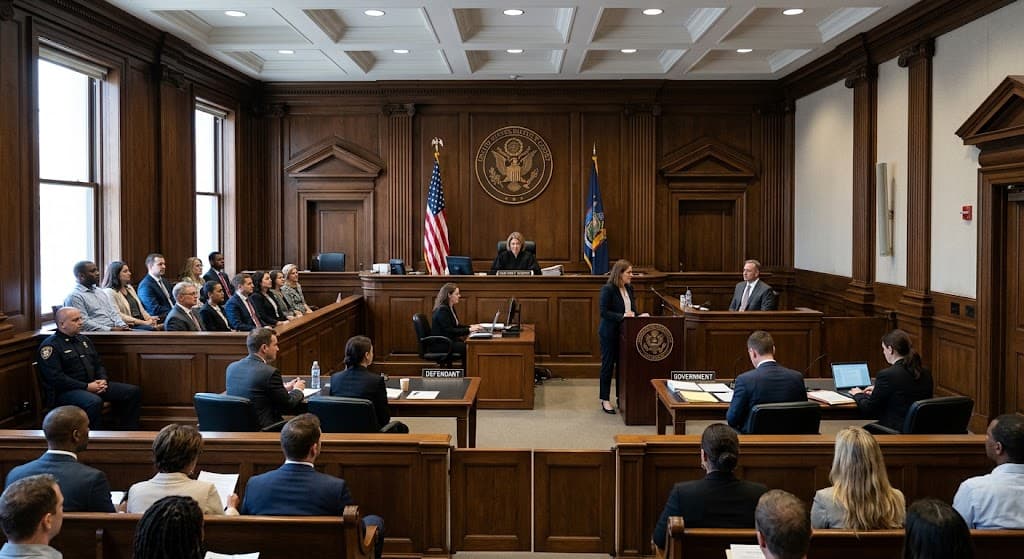
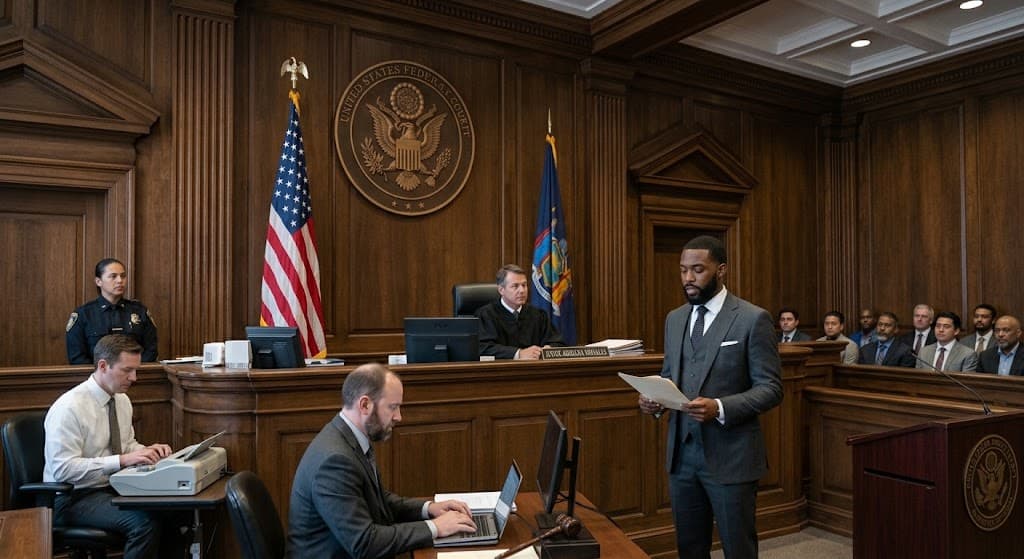
Kalshi has spent the last four years presenting itself as the gold standard of American regulatory compliance. They walk into congressional hearings, corporate boardrooms, and federal courthouses wearing the armor of a federally licensed Designated Contract Market (DCM), regulated directly by the Commodity Futures Trading Commission (CFTC).
That federal license changes the legal stakes completely.
Under Section 4c(a) of the Commodity Exchange Act (7 U.S.C. § 6c(a)), wash sales, accommodation trades, and fictitious transactions are not minor platform bugs; they are federal crimes.
COMMODITY EXCHANGE ACT, SECTION 4c(a):
"It shall be unlawful for any person to offer to enter into,
enter into, or confirm the execution of any transaction...
if such transaction is of the character of, or is commonly
known to the trade as, a 'wash sale' or 'accommodation trade',
or is a fictitious sale."
Federal commodities law exists for a singular reason: to ensure that prices and volumes reported on public exchanges reflect genuine, arms-length economic supply and demand.
When an exchange allows or incentivizes participants to execute fictitious transactions:
It distorts public price discovery.
It deceives the investing public regarding the true liquidity of the marketplace.
It violates the exchange’s core statutory obligations under the Commodity Exchange Act to maintain an honest, orderly market free from manipulation.
For the past year, Kalshi has been fighting state attorneys general in Montana, New York, Washington, and Connecticut, arguing that state gambling laws must yield to federal regulation because Kalshi is an elite, federally supervised financial exchange.
Imagine how that legal defense looks to a federal judge today.
How can Kalshi argue that its federal regulatory oversight shields it from state consumer protection laws, when that very same exchange is allowing market makers to run mechanical wash-trading bots that account for fifty percent of an entire market's volume?
Parlays, Sports, and Interest Rates
The most alarming aspect of the researcher's data dump is that the $5,500 Ethereum perpetual loop and the two-second Mamdani script are not isolated anomalies.
The data reveals that similar repetitive, robotic trading signatures have appeared across multiple other platform categories:
Federal Reserve Rate Markets: Macroeconomic contracts where high volume numbers are cited by financial journalists as an indicator of market expectations, yet order books show identical ticket sizes printing at uniform intervals.
Sports Contracts: High-frequency binary trades executed during low-liquidity games where bids and asks cross without altering the underlying probability spread.
Multi-Leg Parlay Markets: Bizarre combinations of unrelated events showing sudden bursts of millions of dollars in volume within hours of market creation, followed by complete silence.
This is the classic signature of an exchange whose growth has been engineered from the top down rather than grown organically from the bottom up.
When an exchange builds legitimate liquidity, the order book is messy, noisy, and chaotic. You see thousands of distinct wallet addresses, varying ticket sizes, fluctuating intervals, and genuine price friction.
When an exchange manufactures synthetic liquidity, the tape looks like an electrocardiogram of a machine: clean, rhythmic, repetitive, and artificial.
The Crisis of Credibility Facing Prediction Markets
The entire philosophical argument for prediction markets rests on one foundational idea: The Wisdom of the Crowd.
Economists, academics, and financial pioneers have argued for thirty years that open event contracts are superior to traditional polls, expert pundits, and television commentators because market participants have real financial skin in the game.
When people risk real money, the collective price represents the most accurate, truthful forecast of future reality that human civilization can produce.
THE PREDICTION MARKET PROMISE:
Real Capital at Risk ===> Honest Incentives ===> Accurate Truth Discovery
THE WASH-TRADING REALITY:
Synthetic Volume ===> Fake Liquidity ===> Deceptive Signals to the Public
The moment an exchange allows wash trading to corrupt its books, that entire philosophical foundation collapses.
If millions of dollars of trading volume on a political race or an economic indicator are simply two bots owned by the same market maker passing a single dollar back and forth to satisfy a contract quota, there is no wisdom of the crowd.
There is only the vanity of an algorithm.
The price signal becomes compromised. The public trust evaporates. And the opponents of prediction markets: the state regulators, the casino lobbyists, and the skeptical lawmakers: are handed the exact weapon they need to shut the industry down.
What Kalshi Must Do Immediately
This controversy will not vanish with corporate silence.
The receipts are downloaded. The data is mirrored on encrypted cloud drives. Independent quantitative researchers are writing scripts to audit the historical trade tape across every contract Kalshi has ever listed.
If Kalshi wants to preserve its reputation as a serious financial institution, executive leadership must take immediate, transparent action:
Launch an Independent Forensic Audit: Hire an outside, independent accounting and regulatory compliance firm to review every transaction printed across their perpetual and prediction markets over the past twelve months.
Publish the Market-Maker Agreements: Release the complete terms, qualification requirements, and volume quota structures of their institutional market-maker programs to prove that trading desks are not being incentivized to generate fictitious volume.
Implement Strict Anti-Wash-Trading Surveillance: Introduce automated exchange-level algorithms that detect and instantly reject self-trading, identical lot repetition, and artificial high-frequency loops.
Cooperate with Regulators Openly: Address the Commodity Futures Trading Commission directly, report the anomalous activity, and demonstrate that the platform is capable of policing its own order books.
Lesson for Independent Traders
For every everyday trader who has ever placed an order on an electronic prediction exchange, this data leak delivers a vital, sobering lesson:
Never confuse trading volume with real market depth.
A market can display fifty million dollars in cumulative volume while possessing barely five thousand dollars in actual human liquidity.
When you prepare to trade, do not look at the headline volume numbers displayed on the marketing banner:
Look at the active spread between the best bid and the best ask.
Inspect the individual order sizes resting in the order book.
Watch the trade tape to see if transactions are occurring at random human intervals or ticking like an automated metronome.
The promise of prediction markets is too important to be sacrificed on the altar of artificial vanity metrics.
We deserve real markets, built on real capital, reflecting real human conviction.
Rate this piece — one tap, no signup
Editor-in-Chief
Ezekiel Njuguna is the Editor-in-Chief of Predictions Market Fans, where he helps make probabilistic thinking clear and practical for readers. With a strong focus on quantitative research and market mechanics, he leads the site’s technical guides, including a detailed breakdown of Kalshi Combos. His writing connects economic theory with real-world trading strategy, including practical discussions of how yield-bearing tools can support active bankroll management.
The Weekly Signal
Every Friday — the week's sharpest prediction market analysis, forecasting insights, and data-driven commentary. No noise.
Disclaimer: This content is for informational and educational purposes only. It does not constitute financial advice, investment recommendations, or trading guidance. Prediction market participation involves risk of loss. Always conduct your own research before making any financial decisions.