Kalshi Withdraws Montana Lawsuit as Ninth Circuit Fight Continues

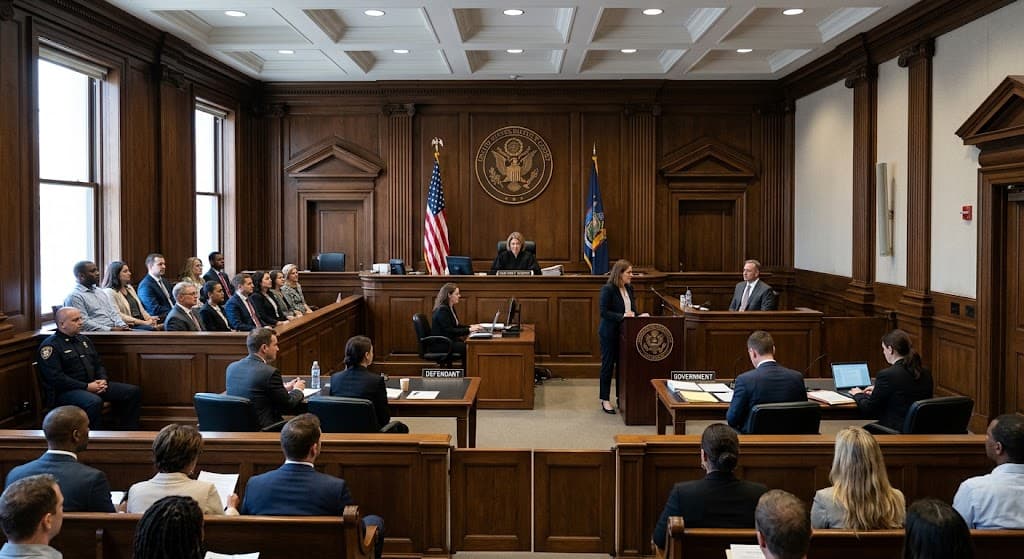
There is a specific kind of quiet terror that only founders understand: the moment you realize the thing you poured your youth, your savings, and your sanity into might not just fail, but might actually land you in a courtroom facing state prosecutors.
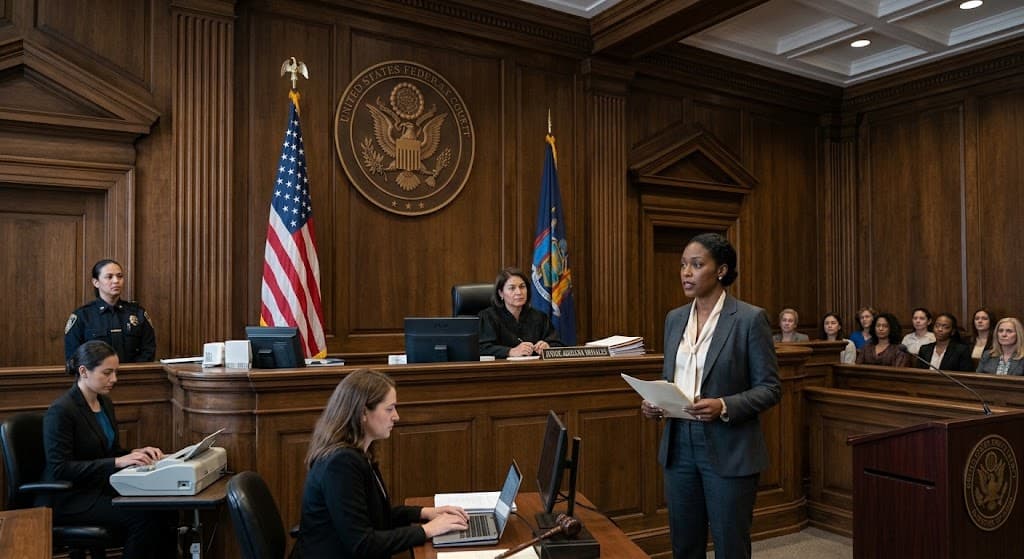
On the morning of September 17, 2026, while financial television was obsessing over interest rates and social media was bickering over campaign polls, a single document was quietly uploaded to the federal court docket in Montana.
To an outsider skimming the legal database, it looked like dry, boring administrative paperwork: a joint stipulation of dismissal.
To anyone who understands the human cost of modern financial innovation, that document was the sound of an exhausted startup catching its breath after staring straight into the abyss.
Kalshi, the federally regulated prediction market exchange founded by young immigrants who dreamed of turning human anticipation into a legitimate asset class, had just executed one of the most delicate, high-stakes retreats in recent legal history.
They were trapped in a two-front war that was threatening to tear the company apart.
On one side stood the Commodity Futures Trading Commission in Washington and a punishing panel ruling from the Ninth Circuit Court of Appeals. On the other side stood Austin Knudsen, the formidable, hard-nosed Attorney General of Montana, backed by state investigators who viewed Kalshi’s event contracts not as modern economic hedging tools, but as an illegal, unregulated gambling operation invading homes across Big Sky country.
Had Kalshi lost in Montana, the dominoes would have fallen across all fifty states. State attorneys general from coast to coast would have smelled blood, issued criminal cease-and-desist orders, and choked off the company's banking rails overnight.
Instead, in the shadows of the courtroom, Kalshi’s legal team engineered a ceasefire.
I spent hours dissecting the stipulation, the statutory architecture of Montana gaming laws, and the high-stakes appellate drama unfolding in California. What follows is the story of how an innovative company fought for its life, why they walked away from a fight they could not win today, and what this tactical truce tells us about the brutal war over the future of American finance.
The Clash of Two Completely Different Worlds
To understand why this court filing carries so much emotional weight, you have to picture the two worlds colliding in Helena, Montana.
In one corner, you have the tech visionaries. The founders of Kalshi did not build their platform to run a digital casino. They spent years walking through the halls of federal agencies in Washington, submitting to grueling background checks, raising institutional capital, and arguing that everyday citizens deserve the right to hedge real-world risks.
If a farmer in the Midwest wants to hedge against a severe drought, or if a small business owner wants to protect their inventory against an unexpected tariff, they should be able to buy an event contract. To Kalshi, this was mathematics, risk management, and the democratization of Wall Street.
In the other corner, you have the cultural and legal reality of Montana.
Austin Knudsen did not view this through the lens of Silicon Valley philosophy. State prosecutors look out across their towns and see local families, tribal enterprises, and brick-and-mortar gaming halls that operate under strict, voter-approved local rules.
+-------------------------------------------------------------------+
| THE IDEOLOGICAL COLLISION |
+-------------------------------------------------------------------+
| KALSHI'S PERSPECTIVE: |
| "We are a federally licensed exchange operating under the |
| Commodity Exchange Act. Our contracts are financial derivatives." |
+-------------------------------------------------------------------+
vs.
+-------------------------------------------------------------------+
| MONTANA'S PERSPECTIVE: |
| "You are taking bets on human events over the internet without |
| a state gaming license. That is illegal gambling, plain and simple."|
+-------------------------------------------------------------------+
When an online platform arrives and allows citizens to put money on whether an election will be won or whether a policy will pass, state regulators do not see a sophisticated financial derivative. They see an unlicensed sportsbook masquerading as a modern financial exchange.
The tension was suffocating. If Montana succeeded in prosecuting Kalshi under state criminal gambling statutes, the narrative that Kalshi was a safe, federally compliant financial institution would have collapsed.
For the people who spent years building Kalshi, this was not an abstract debate. It was an existential threat to everything they had built.
Why Kalshi Could Not Afford to Fight
Why did Kalshi choose mid-September 2026 to lay down its weapons in Montana?
Because in warfare, whether on a physical battlefield or inside a federal courthouse, fighting a two-front war is a guaranteed prescription for suicide.
While Kalshi’s attorneys were trading legal blows with Montana officials, the company was fighting an even bigger, more dangerous war in California before the United States Court of Appeals for the Ninth Circuit.
On August 28, a three-judge panel of the Ninth Circuit dealt Kalshi a severe blow in its ongoing clash with the federal government. The appellate decision raised grave questions about whether event contracts tied to political or public contests could legally trade on a federally designated contract market under the Commodity Exchange Act.
Think about the psychological pressure inside Kalshi's leadership room in early September:
THE SQUEEZE ON KALSHI
│
┌────────────────────────┴────────────────────────┐
▼ ▼
[FRONT 1: WASHINGTON & 9TH CIRCUIT] [FRONT 2: THE 50 STATES]
Fighting the federal regulator (CFTC) Facing local prosecutors (Montana)
over core statutory definitions under who want to bring state-level
the Commodity Exchange Act. criminal gambling charges.
If Kalshi pushed forward with its lawsuit against Montana, the federal judge in Montana would look directly at the Ninth Circuit’s August 28 ruling. The judge would likely say: If the federal appeals court is questioning your authority in California, why should I stop Montana from enforcing its own state criminal laws?
An outright legal loss in Montana would have created an immediate, binding precedent. Once one state secured a formal judicial declaration that event contracts violate state gambling codes, other state regulators would have rushed to copy the playbook.
Kalshi would have had to spend millions of dollars defending itself in fifty separate state jurisdictions simultaneously. No startup, no matter how well-funded by Silicon Valley venture capitalists, has the legal budget or emotional endurance to survive fifty parallel criminal enforcement battles.
Kalshi needed an exit door. They needed to freeze the battlefield in Montana so they could direct every single ounce of their energy, legal intellect, and financial resources toward their last stand at the Ninth Circuit: the petition for rehearing en banc.
Dissecting the Deal: The Split That Saved the Company
When you read the joint stipulation filed on September 17, you see a masterclass in legal maneuvering.
Kalshi did not simply pack up its bags and run away with its tail between its legs. Their attorneys negotiated a clever, bifurcated truce that bought the company the precious time it needed to survive.
Look at the specific terms of the dismissal:
+---------------------------------------------------------------+
| THE ANATOMY OF THE MONTANA CEASEFIRE |
+---------------------------------------------------------------+
| 1. THE COMMISSION DEFENDANTS: |
| Dismissed WITH PREJUDICE (Permanent). |
| Reason: The Gaming Commission has zero arrest power anyway.|
+---------------------------------------------------------------+
| 2. THE ATTORNEY GENERAL (Austin Knudsen): |
| Dismissed WITHOUT PREJUDICE (Temporary truce). |
| Reason: Knudsen keeps his power, but Kalshi keeps its |
| right to sue him again if he attacks. |
+---------------------------------------------------------------+
| 3. THE 30-DAY EMERGENCY BUFFER: |
| Montana agrees to freeze all enforcement until the |
| Ninth Circuit rules on Kalshi's petition, plus a |
| mandatory 30-day written warning before any future action. |
+---------------------------------------------------------------+
Let us break down why this split is brilliant:
1. Letting Go of the Toothless Bureaucrats
First, Kalshi dismissed the five individual members of the Montana Gambling Control Commission with prejudice. That means Kalshi can never file this lawsuit against those specific individuals again.
Why give that up? Because under Montana state law, the Gambling Control Commission does not actually have independent police power. They cannot send investigators to shut down servers, and they cannot file criminal charges in court. Their only authority is to write reports and hand them over to other agencies.
By dismissing them permanently, Kalshi gave the state of Montana a face-saving victory without giving up a single ounce of real protection.
2. Keeping the Gun Pointed at the Real Prosecutor
Second, Kalshi dismissed Attorney General Austin Knudsen and the actual Gambling Control Division without prejudice.
This is the critical detail. A dismissal without prejudice means the dispute is paused, not dead. If Austin Knudsen’s office wakes up tomorrow and decides to issue an indictment against Kalshi, Kalshi has the immediate legal right to revive the lawsuit and drag him straight back into federal court.
Kalshi gave up nothing against the person who actually holds the keys to the state prison.
3. The Golden 30-Day Warning Buffer
Finally, Kalshi extracted a crucial promise from the state of Montana.
Montana agreed that it will not initiate, refer, or support any enforcement action against Kalshi while the Ninth Circuit is considering Kalshi’s petition for an en banc rehearing.
Even better: if the Ninth Circuit rejects Kalshi’s petition and Montana decides to resume enforcement, the state must provide Kalshi with thirty days of advance written notice.
Think about what that thirty-day buffer means to a company under siege.
In normal criminal enforcement, state agents raid your partners, send sudden subpoenas to your payment processors, and issue public press releases that tank your business before you can even hire an attorney.
Because of this agreement, Kalshi can never be ambushed in Montana. They have guaranteed themselves a full month of lead time to file an emergency injunction, adjust their platform settings, or geofence their app to protect their executives from criminal liability.
The Invisible War Over Federal Preemption
Beneath the legal technicalities of this Montana truce lies the most important philosophical battle in modern American commerce: Federal Preemption.
This is the issue that keeps fintech innovators awake at night.
When Congress passed the Commodity Exchange Act, the goal was to create a single, unified national marketplace for derivatives, agriculture, and commodities. Congress wanted one federal regulator, the Commodity Futures Trading Commission, to set the rules.
Imagine how chaotic the American economy would be if every single state had the power to decide how corn futures, crude oil contracts, or interest rate swaps were traded.
If New York allowed a financial contract, but Texas declared it illegal, and Montana decided to arrest the brokers, national commerce would grind to a dead halt. Federal law was designed to be the supreme law of the land, overriding local state statutes.
THE PREEMPTION DILEMMA:
Federal View: Commodity Exchange Act creates one uniform national market.
State View: The Tenth Amendment gives states the right to police gambling.
The Crisis: When a financial contract looks like a bet, who wins?
Prediction markets have walked directly into this historic trap.
Because an event contract asks a binary question (Will an event occur, yes or no?), state gaming regulators view it through the lens of traditional gambling. They argue that local communities have a sovereign right to protect their citizens from betting addiction, financial ruin, and predatory operators.
Kalshi’s entire corporate existence depends on proving that federal financial law preempts state gaming law.
If Kalshi is right, then an approval from the CFTC in Washington serves as a golden shield that protects them across every zip code in America.
If Montana is right, then federal financial licenses are useless against local prosecutors, and any state attorney general can shut down a nationwide technology platform on a whim.
By stepping back in Montana, Kalshi avoided a premature ruling that could have destroyed that federal shield before the appeals court in California had its final say.
Rate this piece — one tap, no signup
Editor-in-Chief
Ezekiel Njuguna is the Editor-in-Chief of Predictions Market Fans, where he helps make probabilistic thinking clear and practical for readers. With a strong focus on quantitative research and market mechanics, he leads the site’s technical guides, including a detailed breakdown of Kalshi Combos. His writing connects economic theory with real-world trading strategy, including practical discussions of how yield-bearing tools can support active bankroll management.
The Weekly Signal
Every Friday — the week's sharpest prediction market analysis, forecasting insights, and data-driven commentary. No noise.
Disclaimer: This content is for informational and educational purposes only. It does not constitute financial advice, investment recommendations, or trading guidance. Prediction market participation involves risk of loss. Always conduct your own research before making any financial decisions.