24 Tribes Join Novig’s New York Prediction Market Fight

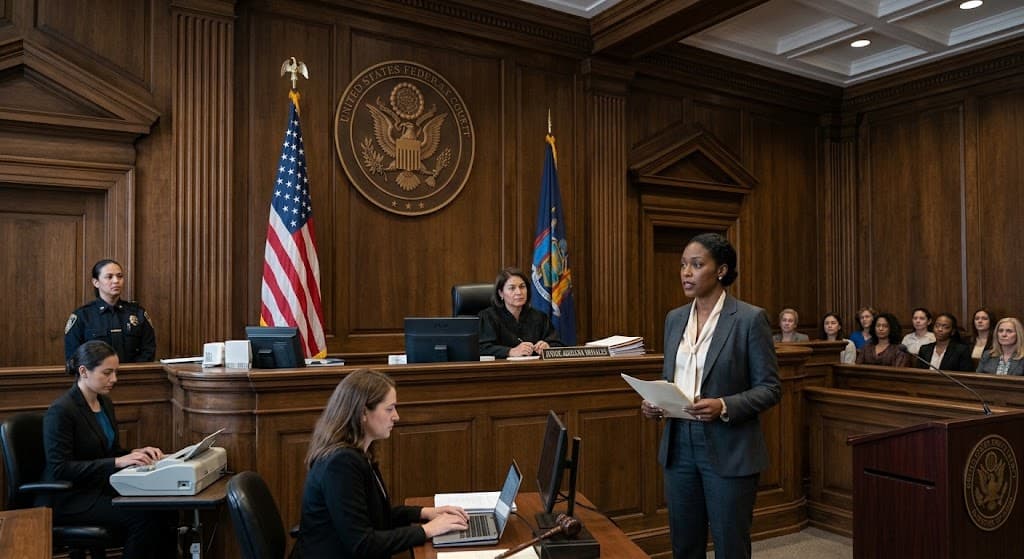
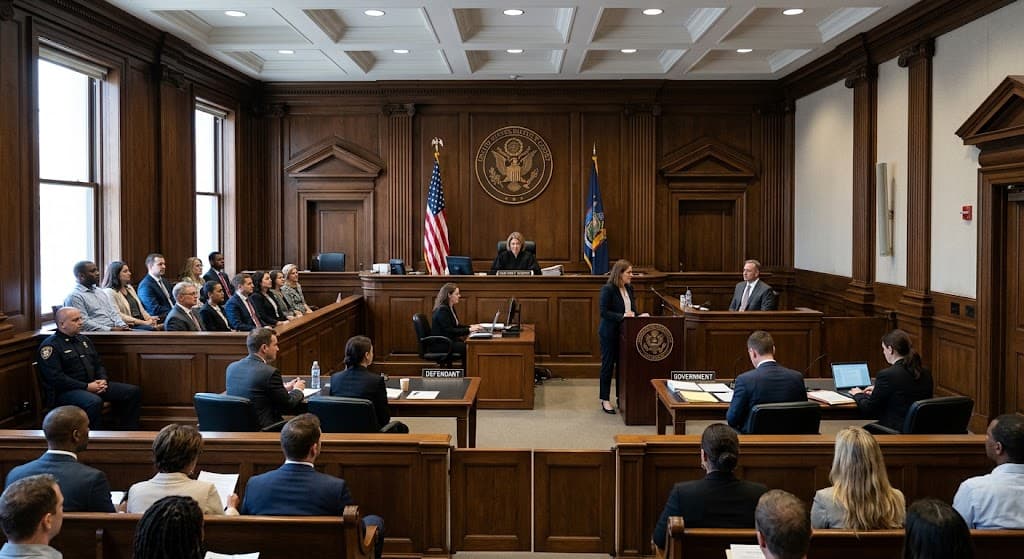
On September 17, 2026, inside a quiet federal courtroom in lower Manhattan, a judge picked up a pen and wrote a single sentence in blue ink across the corner of a legal letter:
The motion is granted and the brief is accepted.
Judge Colleen McMahon signed her name, the court clerk stamped the document the next morning, and the paper slipped into the public docket of the Southern District of New York.
To the casual observer, it looked like standard judicial bookkeeping.
In reality, those eight handwritten words shattered the central fantasy of the entire sports prediction market industry.
For the past two years, high-flying financial technology startups backed by hundreds of millions of dollars in venture capital have marched across the country with a single, aggressive legal script:
Step 1: Launch sports-betting contracts on your app.
Step 2: Call the bets "binary swaps" or "event derivatives."
Step 3: Secure a registration from the Commodity Futures Trading Commission in Washington.
Step 4: Sue state governments in federal court before local prosecutors can touch you, arguing that federal commodities law wipes state gambling laws off the map.
They framed their entire campaign as a classic duel between two titans: the federal government in Washington versus state attorneys general.
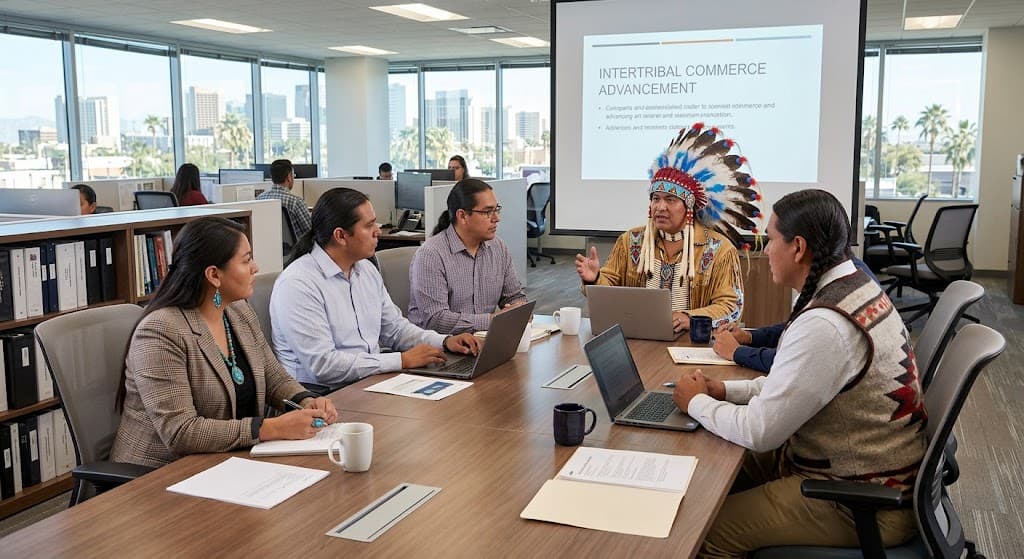
With that single stroke of her pen, Judge McMahon invited an unexpected titan into the courtroom: The Sovereign Native American Tribes of the United States.
A coalition of twenty-four federally recognized tribes and national organizations, including the Seminole Tribe of Florida, the Mohegan Tribe of Indians of Connecticut, the Mashantucket Pequot Tribal Nation, and eleven California tribes, stepped directly onto the battlefield.
Representing hundreds of tribal governments whose healthcare clinics, police departments, schools, and elder pensions are funded by voter-approved gaming compacts, they arrived with an unmistakable message:
You forgot about the third sovereign in American law. And we are not going anywhere.
I spent days reviewing the court letters, the landmark appellate decisions issued this week, and the decades of federal Indian law that Silicon Valley thought it could ignore. What follows is the story of how an ambitious startup walked into an ambush, why a federal judge in California compared an event contract to a poker hand, and why the ultimate battle over prediction markets will not be decided in Silicon Valley, but on sovereign tribal lands.
The Forty-Eight-Hour Ambush
To understand how Novig ended up in front of Judge McMahon, you have to look at the aggressive corporate strategy that launched this lawsuit.
Novig is an ambitious sports-prediction platform that operates through a federally registered exchange called the Ludlow Exchange. Unlike traditional sportsbooks that take the opposite side of a user's bet and charge a high fee, Novig operates as an open matching engine: buyers trade contracts with sellers, and the platform takes a tiny transaction cut.
On August 4, 2026, Novig pushed the button. They launched their sports contracts across forty-seven American states simultaneously.
Then, exactly one day later, on August 5, Novig filed a federal lawsuit against New York Attorney General Letitia James and the members of the New York State Gaming Commission.
THE AGGRESSIVE STARTUP PLAYBOOK:
Day 1: Launch sports contracts across 47 states at once.
Day 2: Sue the state attorney general before they can investigate you.
Claim: Federal commodities law preempts all state gambling statutes.
Goal: Freeze state police power with an immediate federal injunction.
Think about how audacious that move was.
New York had not even sent Novig a warning letter. The State Gaming Commission had not issued a fine. Yet Novig asked a federal judge to step in and restrain a sovereign state government in advance, demanding that New York be legally forbidden from applying its criminal gambling laws to Novig's sports contracts.
Novig’s legal argument rested entirely on federal preemption.
They argued that because their exchange is registered with the Commodity Futures Trading Commission under the Commodity Exchange Act, state gambling laws no longer exist for their products. In Novig’s view, if a customer in Brooklyn buys a contract on whether the New York Yankees will win tonight’s baseball game, that customer is not gambling; they are trading a federal financial derivative, just like an oil future or a gold swap.
Judge McMahon looked at this aggressive maneuver in August and immediately pump-braked the engine. She denied Novig’s request for an emergency temporary restraining order, pointing out that another federal judge in Manhattan, Judge Analisa Torres, had already rejected the exact same theory when Kalshi tried it in July.
Judge McMahon made it clear: there would be no shortcuts in her courtroom.
Judge McKeown’s Decisive Blow
While Novig’s lawyers were preparing their arguments in Manhattan, an appellate earthquake struck three thousand miles away in California.
On Wednesday of this week, a unanimous three-judge panel of the United States Court of Appeals for the Ninth Circuit handed down a historic ruling in Blue Lake Rancheria v. Kalshi. The decision dismantled the linguistic wall that prediction market exchanges have spent years building.
For years, exchange executives have insisted that what they offer is fundamentally different from a sportsbook wager. They argued that because their contracts trade on an electronic order book with fluctuating market odds, they belong in the same category as corn options, interest rate swaps, and treasury hedges.
Writing for the unanimous Ninth Circuit panel, Judge M. Margaret McKeown addressed that argument with surgical clarity.
She asked the court to picture a real-world scenario:
Imagine a bettor standing inside a tribal casino in California. The bettor pulls out two mobile phones:
On the first phone, they open a licensed sportsbook app and place a $100 wager on a baseball game.
On the second phone, they open an event-market app and buy a $100 contract on the exact same baseball game.
Judge McKeown looked at the two transactions and stated the uncomfortable truth:
Nothing about the human being changes.
Nothing about the physical location changes.
Nothing about the financial capital at risk changes.
Nothing about the final athletic outcome changes.
As Judge McKeown wrote with cutting precision: "The only thing that changes is Kalshi's vocabulary."
+-------------------------------------------------------------------+
| THE TWO-PHONE CASINO TEST |
+-------------------------------------------------------------------+
| PHONE 1 (Traditional Sportsbook): |
| - Location: Tribal Casino Floor |
| - Action: Puts $100 on the Dodgers to win tonight. |
| - Label: "A sports bet under state and tribal law." |
+-------------------------------------------------------------------+
vs.
+-------------------------------------------------------------------+
| PHONE 2 (Prediction Market App): |
| - Location: Exact same Tribal Casino Floor |
| - Action: Puts $100 on the Dodgers to win tonight. |
| - Label: "A binary swap contract under federal commodities law." |
+-------------------------------------------------------------------+
NINTH CIRCUIT VERDICT:
"The only thing that changes is the vocabulary."
The Ninth Circuit ruled that when accessed from tribal lands, these contracts constitute Class III gaming under the Indian Gaming Regulatory Act of 1988.
The court ruled that swapping out the word "bet" for the word "contract" does not magically turn an unlicensed wager into an exempt financial instrument.
Why Indian Country Stepped In
To Silicon Valley, the Ninth Circuit ruling and the tribal brief accepted by Judge McMahon felt like a sudden ambush.
To anyone who knows American history, it was the predictable consequence of ignoring the third sovereign in the constitutional structure of the United States.
When the media covers legal clashes, it always talks about two players: the Federal Government and the States. But American law has long recognized three distinct sovereign entities:
The Federal Government
The State Governments
Federally Recognized Native American Tribes
In 1988, after decades of bitter political fighting, Congress codified this relationship for the gaming industry by passing the Indian Gaming Regulatory Act (IGRA).
The compromise at the heart of that 1988 law was delicate and profound:
THE HISTORIC TRIBAL-STATE COMPACT:
Tribes give up absolute independence ===> Agree to revenue-sharing with states.
States give up absolute control ===> Grant tribes exclusive gaming rights.
Result: A legally binding federal treaty that funds sovereign tribal services.
Under this federal framework, tribes entered into formal, government-to-government compacts with individual states.
The tribes agreed to share hundreds of millions of dollars of their gross revenues with state governments. In return, the states granted tribal nations the exclusive legal right to offer specific forms of gaming within defined geographic boundaries.
For Native American nations, this was not about making money for private shareholders.
The revenue generated by tribal gaming is sovereign public money. It buys ambulances. It funds reservation dialysis centers. It builds drinking-water pipes. It pays the salaries of tribal police officers. It funds language preservation schools for children whose ancestral tongues were almost wiped out.
Now, imagine what happens when a tech platform launches an app nationwide and says: None of those compacts apply to us. Anyone standing on reservation land can bypass your tribal laws, pull out an iPhone, and trade sports contracts directly on our exchange because a federal commodities regulator in Washington gave us a license.
If a mobile phone can carry an unregulated sportsbook onto sovereign tribal land and bypass thirty years of negotiated compacts, the entire legal foundation of tribal self-determination is hollowed out.
That is why twenty-four tribal nations and national organizations entered Judge McMahon’s courtroom in New York. They did not show up out of corporate jealousy. They showed up because the legal theory being advanced by Novig threatens to wipe out the economic foundation of modern tribal self-government.
The Myth of Hidden Preemption
How did the prediction market industry convince itself that it could legally bypass both state and tribal gaming laws in the first place?
The entire industry position relies on an audacious legal interpretation of the Dodd-Frank Wall Street Reform and Consumer Protection Act of 2010.
Following the global financial crisis of 2008, Congress passed Dodd-Frank to clean up Wall Street. The primary target of that massive law was the opaque, unregulated derivatives market: credit default swaps, collateralized debt obligations, and mortgage-backed instruments that brought the global banking system to its knees.
Congress gave the Commodity Futures Trading Commission broad authority over "swaps."
Years later, prediction market lawyers looked at that broad definition of a swap and had a revelation: What if we define a bet on the Super Bowl as an event-driven commodity swap? If we register as a swap exchange, the federal government owns the space, and the states cannot touch us!
Earlier this summer, forty state attorneys general submitted a unified brief to a federal appeals court pointing out the sheer absurdity of that claim.
THE REGULATORY TIMELINE:
- 1988: Congress passes IGRA to protect tribal gaming sovereignty.
- 2010: Congress passes Dodd-Frank to regulate Wall Street mortgage derivatives.
- 2018: Supreme Court strikes down PASPA, giving states sports-betting control.
- 2026: Tech startups claim Dodd-Frank secretly legalized nationwide sports betting.
Think about what Novig is asking federal judges to believe.
They are asking courts to believe that in 2010, while Congress was desperately trying to stop multinational investment banks from collapsing the global economy, lawmakers quietly and secretly decided to repeal two hundred years of state police power over gambling and overwrite thirty years of federal tribal treaties, without a single member of Congress ever mentioning sports betting during floor debates.
The United States Supreme Court has repeatedly held that Congress does not "hide elephants in mouseholes."
You do not fundamentally reorganize the legal structure of American sports betting and tribal sovereignty through a buried clause in a banking reform statute. If Congress wants to create a national, federally regulated sports exchange that overrides state and tribal compacts, Congress must pass an explicit law saying so.
The Reality of Novig’s Dilemma
To be fair, Novig’s underlying commercial grievance is understandable.
In their legal complaint, Novig explains the frustrating reality they encountered when trying to build their business through the traditional state-by-state licensing system.
When they approached state regulators in Colorado, they were told that a traditional sportsbook could receive a license, but an open peer-to-peer exchange had no clear legal category.
Furthermore, modern financial exchanges rely entirely on liquidity.
If you force an exchange to fragment itself into fifty separate state boxes: where a trader in New York can only trade with other New Yorkers, and a trader in Colorado can only trade with other Coloradans, the order books become thin, spreads widen, and the platform dies. An exchange naturally needs a single, unified national network to work.
That is an accurate technical diagnosis of how exchanges operate.
However, an economic inconvenience does not rewrite the United States Constitution.
If the current patchwork of state and tribal gaming laws makes it difficult to operate an electronic exchange, the proper constitutional venue for that grievance is the United States Capitol, not a federal district court in Manhattan.
You must convince Congress to pass modern legislation that establishes a federal framework for prediction exchanges, complete with statutory revenue-sharing protections for states and tribes.
You cannot simply ask a single federal judge to declare that state and tribal sovereignty ceased to exist because your software works better with a national liquidity pool.
The Circuit Split: The Road to the Supreme Court
Where does this leave the prediction market industry today?
It leaves them standing on the edge of a legal cliff.
The federal judiciary is now sharply divided across regional circuits:
The Third Circuit: Has leaned toward the exchanges, finding that event contracts fit within the broad federal definitions of the Commodity Exchange Act.
The Ninth Circuit: Has landed a heavy blow against the exchanges, holding unanimously that sports contracts constitute gaming under federal Indian law when accessed from tribal territory.
The Second Circuit (New York): Federal judges in Manhattan are voicing deep skepticism. Judge Torres ruled against Kalshi in July, Judge McMahon denied Novig's emergency restraining order, and Judge Lorna Schofield questioned the federal commodities regulator's own attempts to halt New York enforcement.
THE FRACTURED JUDICIAL LANDSCAPE:
[3rd Circuit (Philadelphia)] ===> Sides with Exchanges (Federal Preemption)
[9th Circuit (San Francisco)] ===> Sides with Tribes (IGRA Class III Gaming)
[2nd Circuit (New York)] ===> Expressing Heavy Skepticism of Tech Claims
=============================================================================
DESTINATION: The United States Supreme Court
When federal appeals courts produce directly contradictory rulings on a multi-billion-dollar national issue, there is only one place left to go: The Supreme Court of the United States.
The petition has already been drafted. The justices will eventually have to take the case and decide whether an event contract is a financial derivative or an electronic bet.
The Lesson Silicon Valley Refuses to Learn
There is a profound lesson in Judge McMahon's handwritten blue-ink endorsement for every startup founder, venture capitalist, and tech lawyer operating in America today.
For the last fifteen years, the tech playbook was defined by a phrase popularized in Silicon Valley: Move fast, break things, and ask for forgiveness later.
Ride-sharing companies launched without taxi permits. Home-sharing platforms operated without hotel licenses. Social media networks scraped data without asking permission. When regulators complained, the companies used their massive consumer fanbases to force local politicians to capitulate.
That playbook does not work against sovereign nations.
State attorneys general are constrained by election cycles and political pressures. But Native American tribes operate with an entirely different institutional timeline.
Tribal governments have survived centuries of broken treaties, forced relocations, and legal disenfranchisement. They have spent the last fifty years building sophisticated, well-funded legal institutions that know how to fight and win inside the federal court system.
When tech startups treat tribal governments as an afterthought: assuming that a clever rebranding campaign will bypass tribal sovereignty, they make a fatal strategic miscalculation.
Novig thought it was entering a simple courtroom duel with Letitia James.
Instead, it walked into a room where twenty-four sovereign nations were waiting with forty years of federal statutory precedents in their hands.
A shield constructed out of corporate vocabulary cannot survive when real human sovereignty enters the room. If prediction markets want to survive in America, they need to stop looking for legal loopholes in Manhattan courthouses, sit down at the table with tribal and state leaders, and do the hard work of negotiating a real compact for the modern digital age.
Rate this piece — one tap, no signup
Editor-in-Chief
Ezekiel Njuguna is the Editor-in-Chief of Predictions Market Fans, where he helps make probabilistic thinking clear and practical for readers. With a strong focus on quantitative research and market mechanics, he leads the site’s technical guides, including a detailed breakdown of Kalshi Combos. His writing connects economic theory with real-world trading strategy, including practical discussions of how yield-bearing tools can support active bankroll management.
The Weekly Signal
Every Friday — the week's sharpest prediction market analysis, forecasting insights, and data-driven commentary. No noise.
Disclaimer: This content is for informational and educational purposes only. It does not constitute financial advice, investment recommendations, or trading guidance. Prediction market participation involves risk of loss. Always conduct your own research before making any financial decisions.