Washington Judge Rejects Kalshi Bid to Reconsider Injunction

Imagine waking up at nine o’clock on a Wednesday morning, opening your laptop with trembling hands, and watching your entire company get caught in a crossfire between two sovereign governments who are both threatening to destroy you.
Imagine that on your left stands the federal government in Washington, warning you that if you close your platform to citizens of any state, you are violating federal commodities law and risk losing your federal exchange license.
Imagine that on your right stands a state judge in Seattle, warning you that if you do not immediately block those exact same citizens, you are violating state criminal law and will be fined one hundred and twenty thousand dollars every single day the sun rises.
That is not a theoretical law-school hypothetical. That is the living, suffocating nightmare that hit the founders, executives, and engineers of Kalshi on a quiet morning in King County Superior Court.
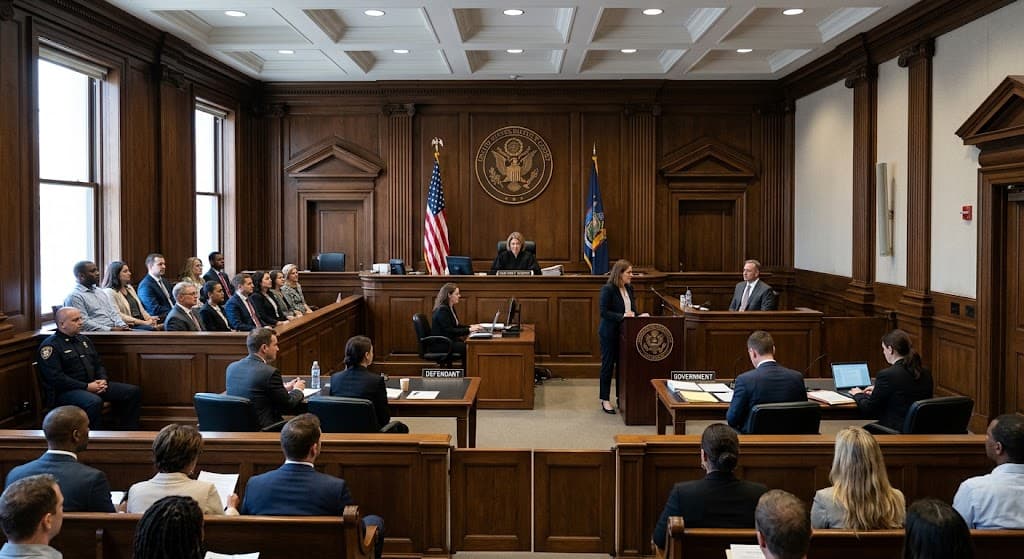
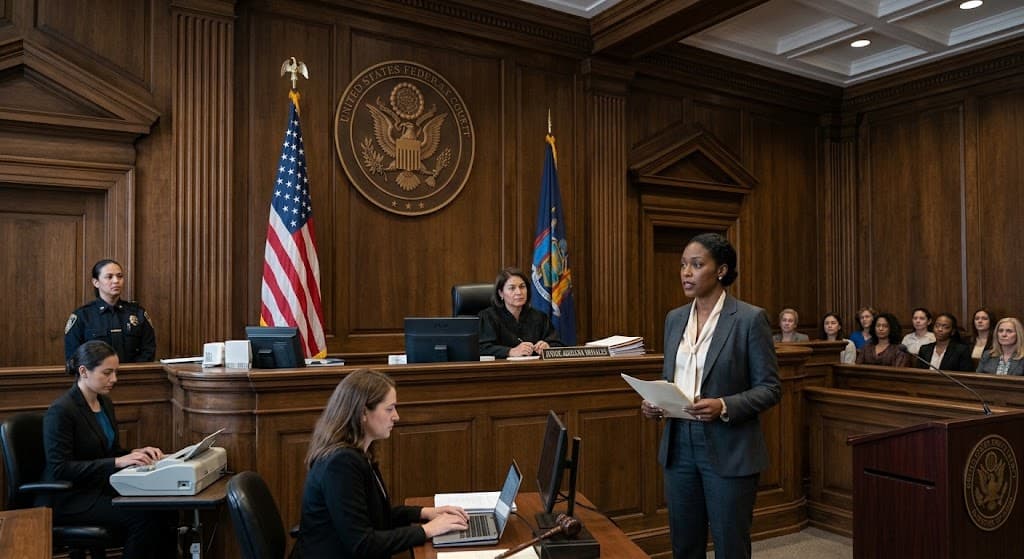
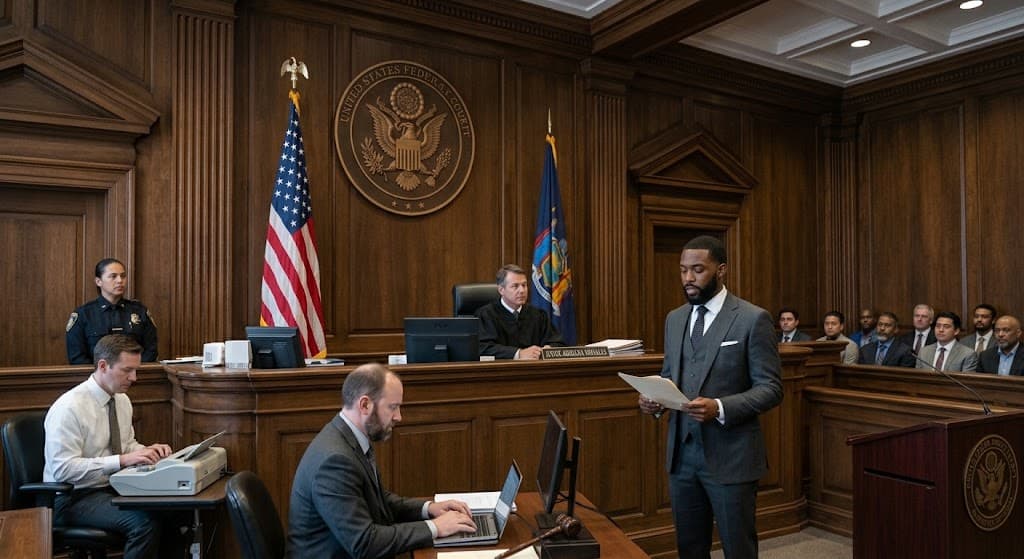
At 9:00 AM on Wednesday, 16th September 2026, Judge John F. McHale filed a single-page order into the court docket.
The document was completely devoid of flowery rhetoric. It contained no judicial explanations, no philosophical analysis, and no comforting words of guidance. In a single, cold sentence, Judge McHale denied Kalshi’s motion to reconsider an amended preliminary injunction "in its entirety."
With that stroke of an administrative pen, the court left in place an order that strips Kalshi’s platform down to the bone in Washington State, banning contracts on sports, elections, politics, entertainment, culture, technology, and science.
Worse still, it left hanging over the company’s head a terrifying financial penalty: up to $120,000 a day for any failure to enforce strict digital geofencing against local residents.
When you look at the raw human cost behind the headlines, this stops being a dry legal dispute over event contracts. It becomes an alarming portrait of an innovative American company caught in a trap created by political cowardice.
I spent days reading through the Seattle court records, the opposing declarations from state attorneys, and the contradictory orders flying out of federal agencies. What follows is the story of how a single-page order exposed the breakdown of American financial regulation, why Kalshi was backed into an impossible corner, and why this clash threatens every technology builder in the country.
The Anatomy of an Administrative Ambush
To understand the sheer panic that a ruling like this creates inside a young company, you have to look at what Judge McHale’s order actually enforces.
This was not a minor administrative fine. It was an existential mandate that struck at the core of Kalshi’s business model.
According to court records, the amended preliminary injunction requires Kalshi to systematically block Washington residents from trading across nearly every popular market category they offer:
Athletic contests and sports outcomes
Political races, elections, and policy decisions
Cultural, entertainment, and media awards
Scientific breakthroughs and technological milestones
Public "mention" markets tracking speech topics
The only categories spared by the court were traditional physical commodities, climate indicators, macroeconomics, and interest rate products.
+-----------------------------------------------------------------------+
| WHAT WASHINGTON STATE ORDERED BANNED |
+-----------------------------------------------------------------------+
| BANNED: |
| Sports, Political Elections, Entertainment, Technology, Science, |
| Public Mentions, and Cultural Outcomes. |
+-----------------------------------------------------------------------+
| PERMITTED: |
| Traditional Agricultural Commodities, Climate, Macroeconomics. |
+-----------------------------------------------------------------------+
| THE ENFORCEMENT HAMMER: |
| GeoComply fencing required; fines up to $120,000 every 24 hours. |
+-----------------------------------------------------------------------+
Think about the operational terror of that timeline.
Kalshi was told to begin geofencing users by August 19. They were ordered to have an enterprise-grade GeoComply identity-verification system fully integrated by September 2.
If their engineers missed that second deadline by even one hour, or if a single user in Spokane managed to bypass a digital perimeter using a virtual private network, the state of Washington claimed the legal right to extract $120,000 per day from the company's bank accounts.
For a venture-backed startup, that is not a regulatory cost of doing business. It is a financial guillotine. In thirty days, that penalty totals $3.6 million in cash drained straight into state coffers, with zero recourse if the underlying legal theory is eventually vindicated on appeal.
Kalshi walked into Judge McHale’s courtroom begging for basic relief. They asked the judge to reconsider the injunction, or at the very least, to pause the enforcement while higher courts sorted out the legal chaos.
Judge McHale did not even grant them a hearing. He reviewed the paperwork, checked the box, and dismissed their pleas in four words: denied in its entirety.
Damned If You Do, Damned If You Don't
Why didn't Kalshi simply shrug, install the geofencing software, and quietly move on with its business in the other forty-nine states?
Because Kalshi is trapped in the most brutal administrative dilemma in modern corporate history.
Kalshi is not an unlicensed, offshore crypto casino operating from an island in the Caribbean. Kalshi spent years and millions of dollars securing an official license from the federal government as a Designated Contract Market (DCM), overseen directly by the Commodity Futures Trading Commission (CFTC).
Under the federal Commodity Exchange Act, a federally licensed exchange has a strict, mandatory legal obligation: it must provide impartial access to all eligible market participants.
Federal law explicitly prohibits a national exchange from picking and choosing which American citizens can trade based on arbitrary geographic boundaries. If Kalshi arbitrarily bans a citizen in Seattle simply because local politicians do not like event markets, Kalshi risks violating the federal charter that gives it the legal right to exist in the first place.
Look at the insanity of the position the company occupies:
THE SOVEREIGN CROSSFIRE
│
┌───────────────────────────┴───────────────────────────┐
▼ ▼
[COMMAND FROM WASHINGTON, D.C.] [COMMAND FROM SEATTLE, WA]
The Federal Regulator (CFTC): The State Superior Court:
"You are a federal exchange. You "Block these citizens immediately,
cannot discriminate against users. or pay $120,000 every day until
Stay open, or lose your license." your startup is bankrupted."
In New York, this exact collision escalated to unprecedented heights. When New York authorities threatened to shut down Kalshi’s operations, the federal commodities regulator took the extraordinary step of issuing an emergency federal order commanding Kalshi to keep operating normally, even if a state judge ordered them to close.
Think about the psychological toll on the people building this platform.
If they obey the federal government, local state police and judges threaten to bankrupt them with daily six-figure fines.
If they obey the state judge, the federal government can strip them of their designated exchange status, which would instantly destroy their entire corporate valuation.
Two sovereigns, both carrying the badge of the American legal system, are standing on opposite sides of the room shouting contradictory orders at the exact same company.
And neither sovereign is willing to step back.
The Collapse of the "Impartial Access" Shield
In their desperate bid to survive in Seattle, Kalshi’s legal team put forward what seemed like an unassailable constitutional argument: The Impartial Access Doctrine.
They argued to Judge McHale that complying with Washington's local ban was physically and legally impossible because it directly conflicted with their federal duty to maintain an open, non-discriminatory national trading floor. Under the Supremacy Clause of the United States Constitution, federal rules must override conflicting state orders.
It was a brilliant legal argument on paper.
In practice, it ran headfirst into a brick wall of judicial skepticism.
Judge McHale flatly rejected the argument, concluding that complying with Washington state gambling laws would not prevent Kalshi from meeting its federal obligations.
He was not alone. In the span of just seven days, three separate judges in three different states: Connecticut, Utah, and Washington, systematically rejected Kalshi’s impartial access defense.
THE TRIAL COURT ROUT (SEPTEMBER 2026):
- Connecticut Superior Court: Rejects federal defense; calls contracts "at bottom, sports bets."
- Utah State District Court: Rejects impartial access; orders local compliance.
- King County, Washington: Denies reconsideration "in its entirety"; affirms $120,000/day penalties.
In Connecticut, the presiding judge stripped away the high-tech vocabulary entirely, writing bluntly that no amount of economic theory could disguise the reality that these contracts are, "at bottom," traditional sports wagers.
Trial judges across the country are losing patience with tech platforms that try to use federal administrative language as an absolute shield against local consumer protection laws.
To a local judge in Seattle or Hartford, a citizen using an app to put fifty dollars on the Seattle Seahawks or the outcome of a Senate race looks, walks, and quacks like a gambler.
The argument that an algorithm in a cloud server turns that wager into a federal commodity swap is falling completely flat in trial courts.
The Absurd Geography of American Prediction Markets
The direct consequence of this regulatory warfare is that the United States is rapidly transforming into a fractured, chaotic patchwork of digital borders.
Consider the surreal reality of what a prediction market trader experiences in America today:
If you stand in Philadelphia, you can trade event contracts freely because the United States Court of Appeals for the Third Circuit ruled that these instruments fall under federal commodities law.
If you cross the state border into New York, the State Attorney General has filed a lawsuit against the platform for running an unlicensed casino.
If you travel west to Nevada or Michigan, the exchange has quietly geofenced you out of fear of local gaming authorities.
If you step onto sovereign Native American tribal land in California, the Ninth Circuit Court of Appeals has ruled that sports contracts are illegal Class III gaming under the Indian Gaming Regulatory Act.
And if you land at Seattle-Tacoma International Airport in Washington, a King County judge has forced the company to block you from trading sports, politics, culture, and science under threat of a $120,000 daily penalty.
THE FRACTURED NATION OF EVENT TRADING:
[Philadelphia] ===> FULLY LEGAL (Third Circuit preemption shield holds)
[California Res] ===> ILLEGAL CLASS III GAMING (Ninth Circuit tribal ruling)
[Nevada/Mich] ===> GEOFENCED & BLOCKED (Preemptive regulatory surrender)
[Washington] ===> BANNED UNDER $120,000/DAY CONTEMPT THREAT
[New York] ===> CFTC ISSUES EMERGENCY ORDER COMMANDING TRADING TO CONTINUE
This is not governance. It is institutional madness.
The entire genius of digital finance was that it removed physical friction. It allowed liquidity to pool across borders, creating tight spreads, transparent prices, and efficient risk hedging for all citizens equally.
Instead of building a modern digital financial grid, our fractured court system is forcing technology companies to build digital barbed-wire fences around every individual county and state.
Users face uneven access. Investors face uneven protection. And startups spend more money paying specialized geofencing compliance vendors and appellate lawyers than they do hiring software engineers.
Why Washington Must Act
How did America allow its financial infrastructure to deteriorate into this state-by-state brawl?
Because the institutions that are actually elected to lead have spent the last three years running away from the problem.
1. The Silence of Congress
By June of this year, more than two dozen separate bills addressing prediction markets, event contracts, and digital sports derivatives had been introduced into the United States Congress.
Not a single one has been brought to the floor for a decisive vote.
Lawmakers on Capitol Hill are terrified of the issue. If they vote to support prediction markets, they face the wrath of state lottery directors, tribal gaming leaders, and traditional casino lobbyists who want to protect their multi-billion-dollar local monopolies. If they vote to ban prediction markets, they get labeled as anti-technology dinosaurs suffocating financial innovation.
So Congress does what Congress does best: they do nothing. They sit on their hands, issue vague press releases, and leave private companies to bleed to death in local county courthouses.
2. The Supreme Court Delay
Meanwhile, the highest court in the land continues to wait.
The circuit split between the Third Circuit in Philadelphia and the Ninth Circuit in San Francisco is now mature, obvious, and toxic. You have two federal appellate courts providing completely contradictory interpretations of the Commodity Exchange Act.
Every single week the Supreme Court delays granting certiorari to resolve this split, another state judge issues an emergency injunction, another startup receives a six-figure daily penalty, and the legal crisis deepens.
WHAT NEEDS TO HAPPEN IMMEDIATELY:
1. Supreme Court Certiorari: Take the case this term and define whether an event
contract is a federal swap or a local wager.
2. Congressional Codification: Pass clear legislation establishing a national
exchange framework with statutory state revenue-sharing.
3. Administrative Ceasefire: Freeze daily penalties and emergency conflicting orders
until the highest court establishes the supreme rule.
What It Means to Build in America
There is a deep, agonizing tragedy sitting inside Judge McHale’s one-page order in Seattle.
The founders of Kalshi did not hide in the dark. They did not launch an anonymous offshore platform like Polymarket did in its early years, evading American regulators while operating outside the law.
They did everything the American establishment told them to do:
They hired regulatory counsel.
They registered with the CFTC.
They incorporated in Delaware.
They built identity-verification systems.
They paid American taxes.
And what was their reward for trying to do things the legal way?
Their reward was to be dragged into county courthouses in Seattle, Hartford, and Salt Lake City, facing state judges who refuse to provide written reasons for denying their petitions, while local prosecutors threaten them with $120,000 daily fines.
This is the hidden tax on American innovation that nobody talks about on tech podcasts.
It is the crushing, soul-draining realization that in modern America, doing everything right does not protect you. If you build something that sits on the frontier of human progress, you will be caught in the meat grinder of a broken federalist system where ancient laws are weaponized to protect entrenched local interests.
Judge John F. McHale signed his one-page order, handed it to the clerk, and went home to his family.
For the people fighting to keep Kalshi alive, the clock is ticking. Every morning at sunrise, the threat of one hundred and twenty thousand dollars hangs in the air.
America owes its innovators a single, clear rule. Until Congress or the Supreme Court finds the courage to provide it, the greatest cognitive and financial tools of the modern era will remain trapped inside the crossfire of a legal system that has lost its mind.
Rate this piece — one tap, no signup
Editor-in-Chief
Ezekiel Njuguna is the Editor-in-Chief of Predictions Market Fans, where he helps make probabilistic thinking clear and practical for readers. With a strong focus on quantitative research and market mechanics, he leads the site’s technical guides, including a detailed breakdown of Kalshi Combos. His writing connects economic theory with real-world trading strategy, including practical discussions of how yield-bearing tools can support active bankroll management.
The Weekly Signal
Every Friday — the week's sharpest prediction market analysis, forecasting insights, and data-driven commentary. No noise.
Disclaimer: This content is for informational and educational purposes only. It does not constitute financial advice, investment recommendations, or trading guidance. Prediction market participation involves risk of loss. Always conduct your own research before making any financial decisions.