Ninth Circuit Rules Kalshi Sports Contracts Are Class III Gaming

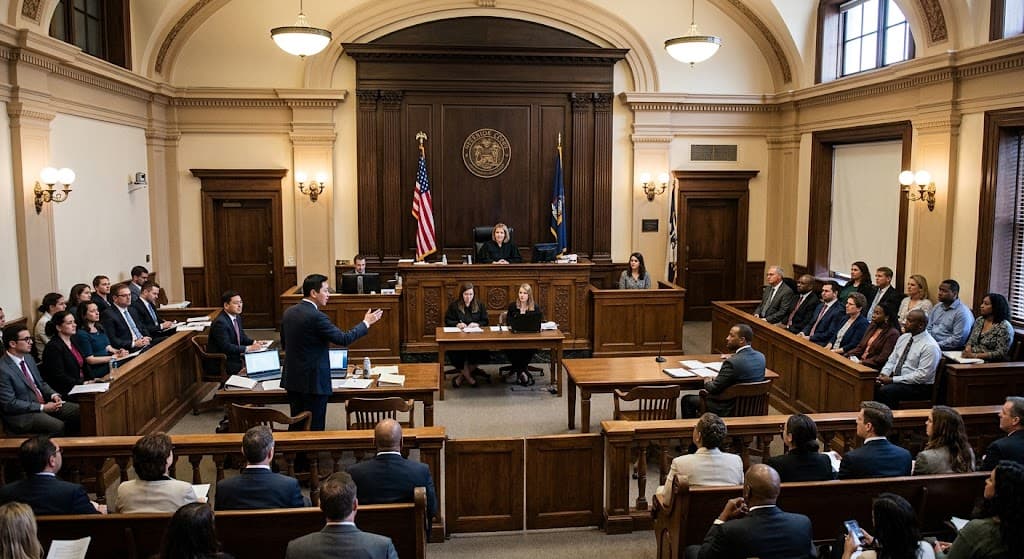
There is a sentence on page 19 of the Blue Lake Rancheria v. Kalshi, Inc. opinion that no amount of CFTC authorization can undo. "Kalshi may reshuffle the cards, but it cannot change the hand: Its sports event contracts are class III gaming."
That sentence is not from a state gaming regulator filing a complaint. It is not from a tribal advocacy organization issuing a press release. It is from a federal court, applying federal law, reaching a conclusion that directly contradicts the regulatory foundation on which Kalshi has built its sports prediction market business.
The 9th Circuit has ruled. The ruling is specific. And the implications run further than any single line in the opinion suggests.
What the Court Actually Held
The holding is not ambiguous and the court was deliberate about stating it without qualification.
Kalshi's sports event contracts constitute "class III gaming activit[ies]" under IGRA's residual definition, which sweeps in "all forms of gaming that are not class I gaming or class II gaming." The National Indian Gaming Commission's implementing regulations make the classification explicit: Class III gaming includes "[a]ny sports betting and parimutuel wagering." 25 C.F.R. § 502.4(c). The emphasis in that regulation is the court's own.
The court applied a functional test rather than a definitional one. IGRA does not ask what an operator calls its product. It asks what the product does. The Department of Interior's compact review regulation defines gaming activity as "the conduct of class III gaming involving the three required elements of chance, consideration, and prize or reward." 25 C.F.R. § 293.2(d).
A user buys a Kalshi sports event contract. The outcome is uncertain. They paid to take the position. They receive a return if the outcome resolves in their favor. Chance. Consideration. Prize or reward. Three elements. Three matches. The court found the analysis required nothing more.
The Advertising That the Court Put in the Opinion
The court included Kalshi's own advertising in the opinion, and the placement is not incidental.
The opinion states directly: "In this court, Kalshi studiously wraps its product in the language of derivatives. Its advertising is less coy." Then it quotes the advertisement the Blue Lake Rancheria tribe challenged in the appeal: "Sports Betting [Is] Legal in all 50 States on Kalshi."
The court reproduced the actual Instagram post. The same sponsored post with Patrick Mahomes visible in the image, the Kalshi logo in the corner, the caption reading "Breaking News: You can now bet on sports in all 50 states with Kalshi."
That advertisement was running nationally. It is now exhibit evidence in a federal circuit court opinion establishing that Kalshi's sports contracts are Class III gaming. The court's observation is precise: Kalshi uses one vocabulary with regulators and another with the public it is trying to attract. The opinion treats that gap as informative rather than irrelevant.
The Blue Lake Casino Floor Hypothetical
The court constructed a comparison that is worth reading without abbreviation because it is the cleanest statement of the legal problem that has been building since Kalshi entered the sports market.
Imagine a user standing on the floor of the Blue Lake Casino Hotel who downloads both Kalshi and DraftKings. On Kalshi, she buys a $100 contract that pays if the San Francisco Giants win. On DraftKings, she wagers $100 on the same outcome. The bettor is the same person. The location is the same casino floor. The stake is $100 in both cases. The contingency is the Giants winning in both cases.
"The only thing that changes is Kalshi's vocabulary."
That sentence is the court's functional analysis reduced to one line. The product is not made into something different by being called an event contract rather than a wager. The legal consequence of placing the bet does not change because the interface that accepted it displays derivatives terminology. The activity is what it is regardless of how the operator has chosen to describe it.
The 90 Percent Number the Court Cited
The court noted, citing trading data reported in the New York Times, that up to 90 percent of Kalshi's trading volume comes from sports.
That figure is the economic weight of the legal question. Kalshi is not a diversified financial product with a sports category as a secondary feature. The Aldrin data from the week of September 8 through 14 showed Kalshi processing $13.4 billion in total volume. At a 90 percent sports share, that is $12.06 billion in a single week from the category the 9th Circuit has now classified as Class III gaming.
The court cited that number in the context of establishing what Kalshi actually is as a business, not just what it labels its contracts. A platform deriving 90 percent of its volume from sports outcome contracts is, in functional terms, a sports gambling operation. The CFTC designation as a derivatives contract market does not change what 90 percent of the business is.
Why the "Located on Indian Lands" Holding Is the Structural Problem
The court addressed a second question beyond the classification of the contracts themselves: whether Kalshi's sports event contracts are "located on Indian lands" for IGRA purposes.
This is where the jurisdictional reach of the ruling extends beyond the Blue Lake Rancheria specifically.
The court held that IGRA does not require the gaming activity to take place exclusively on Indian lands in order to come within its jurisdiction. 25 U.S.C. § 2710(d)(7)(A)(ii). When a user on tribal territory enters into a sports event contract through Kalshi, that activity is covered by IGRA regardless of where Kalshi's servers sit or where the CFTC-licensed exchange is domiciled.
The court drew the rule from its earlier decision in Iipay: where "the act of placing a bet or wager" takes place in a jurisdiction that prohibits the form of betting, the bets are not legal regardless of where the gaming server is located. The same logic applies here in the reverse direction. Where the act of placing a bet or wager occurs on tribal territory, IGRA governs that act regardless of where Kalshi's infrastructure is located.
The practical consequence is that Kalshi does not control whether its sports contracts are "located on Indian lands." The user controls that, by the location from which they access the platform. Every Kalshi sports contract entered from tribal territory is, under this holding, Class III gaming occurring on Indian lands without the tribal-state compact that IGRA requires for such gaming to be lawful.
The CEA Preemption Argument That the Court Rejected
Kalshi's central defense has been that CFTC authorization under the Commodity Exchange Act preempts state and tribal gaming law. The court addressed this directly and rejected it.
The court held that the CEA's "exclusive jurisdiction" language is not a broad grant of control over all commodities-related conduct to the exclusion of all other federal laws. The Supreme Court's own interpretation of that jurisdictional provision, as stated in Merrill Lynch, Pierce, Fenner & Smith, Inc. v. Curran, establishes that it "intended only to consolidate federal regulation of commodity futures trading in the Commission" and to "separate the functions of the Commission from those of the [SEC] and other regulatory agencies."
Section 2 of the CEA states explicitly that "nothing" in it "supersede[s] or limit[s]" federal courts' jurisdiction. 7 U.S.C. § 2(a)(1)(A). The court applied the canon of ejusdem generis to the phrase "other regulatory authorities" in the preemption provision and concluded that the phrase embraces only entities similar to the SEC, not sovereign tribal gaming authorities operating under a separate federal statute.
The court went further: it stated it would be compelled to reverse even if Kalshi's event contracts were categorized as swaps. The preemption argument fails on the text of the CEA itself, not just on its application to IGRA. The "exclusive" jurisdiction the CFTC holds, in the court's reading, describes jurisdiction exclusive of the SEC and similar financial regulators, not jurisdiction exclusive of all other law governing the same activity.
What the Assad Citation Establishes
The court cited Assad, 2026 WL 2543846, at *10, for a conclusion that it described as recently clarified: "the substance of the sports event contracts offered on Kalshi's DCM is sports gambling, regardless of whether Kalshi calls them swaps."
Assad is a prior ruling applying the same functional analysis. The court in the current opinion is not reaching this conclusion for the first time. It is applying an established line of reasoning to the Blue Lake Rancheria facts and reaching the same conclusion that the Assad court reached on different facts.
What this means procedurally is that the 9th Circuit now has at least two opinions applying the functional test to Kalshi's sports contracts and reaching the same result. The Assad citation is not a secondary source. It is precedent. Courts in the 9th Circuit are bound to apply it. The functional analysis is no longer a novel legal theory being tested for the first time. It is the established approach this circuit uses to evaluate Kalshi's product.
The Position the Prediction Markets Industry Is Now In
The week of September 8 through 14 produced $16.8 billion in total CFTC-regulated prediction market volume across all exchanges, led by Kalshi at $13.4 billion. DKeX grew 105.2% to $464 million in its second week of NFL trading. The NFL as a category is generating nine figures of volume per top game.
Every one of those dollars in sports volume is being processed under regulatory authorization that the 9th Circuit has now ruled is insufficient on its own to govern the activity being authorized.
The CFTC can authorize event contracts as derivatives products. That authorization does not answer the IGRA question. The IGRA question, as the 9th Circuit has now framed it, is whether the activity is Class III gaming occurring on Indian lands. That question does not depend on what the CFTC has determined the product to be. The two regulatory frameworks operate on different legal dimensions, and the 9th Circuit has now held that CFTC authorization does not resolve the IGRA analysis.
Kalshi's next option is a petition for en banc rehearing at the 9th Circuit or a certiorari petition to the Supreme Court. Either path is slow. The NFL season is 17 weeks long and running now. The volume being generated during those 17 weeks is volume being processed under regulatory foundations that a federal circuit court has found legally insufficient.
The Line That the Opinion Will Be Remembered For
"Kalshi may reshuffle the cards, but it cannot change the hand."
Federal court opinions are not usually written with that construction. The choice to use a card-playing metaphor in a ruling about gambling is not accidental. It is the 9th Circuit placing its conclusion in the most direct possible terms, using the exact idiom that the product's own nature suggests.
Kalshi has spent two years and significant legal resources establishing that sports event contracts are financial products regulated by the CFTC, not gaming products regulated by state and tribal gaming law. The argument was structurally coherent, legally sophisticated, and commercially successful. The CFTC accepted it. Significant institutional capital was raised against it. A platform generating $13.4 billion in weekly volume was built on top of it.
The 9th Circuit has now held that the argument fails regardless of how it is structured, because the analysis does not turn on structure. It turns on what the activity actually is when a user executes it. The user pays money. A sporting event occurs. The user receives money if they predicted correctly.
The vocabulary Kalshi uses in regulatory filings does not reach that transaction. The transaction is what it is.
Rate this piece — one tap, no signup
Editor-in-Chief
Ezekiel Njuguna is the Editor-in-Chief of Predictions Market Fans, where he helps make probabilistic thinking clear and practical for readers. With a strong focus on quantitative research and market mechanics, he leads the site’s technical guides, including a detailed breakdown of Kalshi Combos. His writing connects economic theory with real-world trading strategy, including practical discussions of how yield-bearing tools can support active bankroll management.
The Weekly Signal
Every Friday — the week's sharpest prediction market analysis, forecasting insights, and data-driven commentary. No noise.
Disclaimer: This content is for informational and educational purposes only. It does not constitute financial advice, investment recommendations, or trading guidance. Prediction market participation involves risk of loss. Always conduct your own research before making any financial decisions.