Why Kalshi Keeps Appearing on CNN
Explore why CNN partnered with CFTC-regulated Kalshi to display live prediction-market probabilities, event contracts, and election data on air.

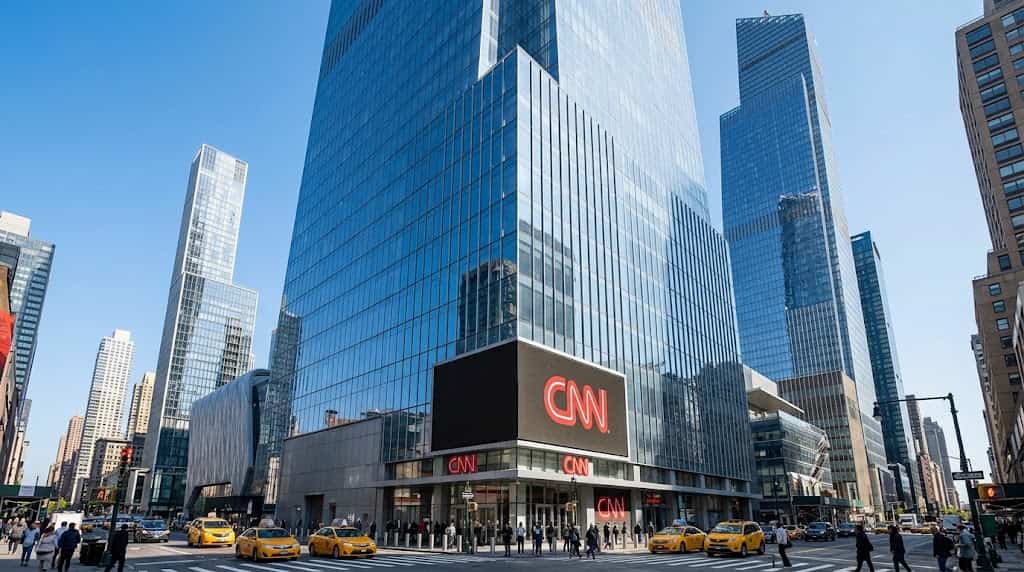
If you have watched CNN’s coverage of major political or cultural events, you may have noticed Kalshi probabilities appearing alongside polling data, electoral analysis, and other forecasting tools.
The reason is a formal data partnership announced in December 2025. Under the arrangement, CNN uses Kalshi’s real-time prediction-market data across its television, digital, and social media coverage. The data is delivered through an API and can appear through live graphics, a dedicated ticker, newsroom analysis, and explanatory content. CNN chief data analyst Harry Enten is leading much of the editorial integration.
This is not best described as a partnership formed during the 2024 election cycle. Kalshi’s election markets became prominent during that election, but the publicly announced CNN agreement came afterwards.
What CNN and Kalshi Actually Agreed To
The arrangement is a data-and-editorial integration, not simply a conventional advertising campaign.
CNN can use Kalshi’s market-implied probabilities when covering major events involving politics, current affairs, culture, and weather. The data may appear in:
On-air graphics.
A real-time ticker.
Digital articles and visualisations.
Social-media content.
Analysis led by CNN’s data and editorial teams.
Axios reported that CNN would receive Kalshi data via an API and that the arrangement was exclusive, meaning CNN would not work with any other prediction-market data provider under the deal. Axios also reported that Kalshi said CNN would not pay a licensing fee for the data. The financial terms of the broader relationship were not publicly disclosed, so it is better to describe the licensing detail as a reported term rather than as proof that the partnership involved no commercial value.
CNN’s own coverage later described the arrangement as a partnership and disclosed that its editorial employees are prohibited from participating in prediction markets.
Why Kalshi Was Attractive to CNN
Kalshi’s regulatory status was likely an important factor, although CNN has not publicly stated that it chose Kalshi solely because it was the only legally acceptable source.
Kalshi became a CFTC-designated contract market in 2020 and operates within the US derivatives framework. That gives the platform a different regulatory profile from offshore or crypto-based prediction markets that may not be authorised to serve US customers in the same way.
For a large news organisation, a domestic platform operating through a federally regulated exchange may be easier to review from legal, compliance, and editorial perspectives. It also provides a formal set of market rules, surveillance obligations, contract specifications, and settlement procedures.
However, CFTC designation does not make every Kalshi market universally legal or automatically accurate. The legal status of particular event contracts (especially sports-related contracts) has remained contested, and state authorities have challenged Kalshi’s operations in several jurisdictions.
The 2024 Election Legal Background
Kalshi’s election markets became possible after a legal dispute with the CFTC.
On September 6, 2024, a federal district judge ruled in Kalshi’s favour and vacated the CFTC’s prohibition on its congressional-control contracts. The CFTC then sought emergency relief from the D.C. Circuit. On October 2, 2024, the appeals court denied the requested stay, allowing Kalshi to offer the election-related contracts while the litigation continued.
The chronology matters:
Kalshi challenged the CFTC’s attempt to block election contracts.
The district court ruled for Kalshi in September 2024.
The D.C. Circuit denied the CFTC’s requested stay in October 2024.
Kalshi’s 2024 election markets attracted substantial public attention.
CNN announced its formal data partnership with Kalshi in December 2025.
The 2024 court rulings therefore helped establish Kalshi as a prominent source of election-market data, but they did not, by themselves, create the CNN partnership.
What Viewers Are Seeing
A Kalshi percentage is neither a poll nor a statement from a CNN commentator. It is the current price of an event contract, converted into an approximate market-implied probability.
For example, if a Yes contract trades at $0.72 on a fully collateralised $1.00 contract, the market price can be read as roughly a 72% implied probability before accounting for fees, bid-ask spreads, liquidity, and other market effects.
That figure reflects the expectations of market participants willing to risk capital. It does not mean that CNN is endorsing the outcome or that Kalshi has established the objectively correct probability.
Prediction-market prices can change when:
New information becomes available.
Traders revise their expectations.
Liquidity changes.
A large order moves the market.
The contract approaches settlement.
Participants respond emotionally or strategically to news.
CNN’s editorial employees are reportedly barred from trading on prediction markets, an important safeguard intended to reduce conflicts of interest.
Market Data Is Not the Same as Truth
Prediction markets can provide a useful additional lens, but they should not replace polls, election models, official statistics, or independent reporting.
A market may be informative when it is liquid, clearly worded, and based on an objectively verifiable outcome. It may be less informative when trading volume is low, the contract rules are ambiguous, the market is dominated by a small number of traders, or the event is highly susceptible to political or legal intervention.
The claim that prediction markets consistently outperform polls by four to seven percentage points should be removed unless it is supported by a clearly identified study with a defined dataset and methodology. Forecasting performance varies considerably across markets and election cycles.
What the Partnership Means
CNN’s use of Kalshi reflects the growing visibility of prediction markets as a source of real-time expectations. It also gives Kalshi significant exposure and helps normalise the idea that event-contract prices belong in mainstream news coverage.
But the relationship should not be described as proof that Kalshi is more accurate than all alternatives or that its regulatory status makes the data “legally safe.” A more defensible conclusion is that Kalshi’s US regulatory status, established market infrastructure, live pricing, and growing public profile made it a practical partner for CNN.
The partnership is therefore both editorial and strategic:
CNN gains a live market-based indicator for future events.
Kalshi gains distribution, visibility, and mainstream legitimacy.
Viewers gain another data point (but must understand what it represents).
When Kalshi appears on CNN, viewers are looking at a market price derived from trading activity, not a conventional poll or a guaranteed forecast. The most responsible interpretation is to treat it as one probability signal among several and to check how the contract is defined before drawing strong conclusions.
Rate this piece — one tap, no signup
Political Markets Correspondent
Mary Ngaruiya is our Political Markets Correspondent, covering the intersection of legislative policy, financial markets, and regulatory conflict. Her reporting focuses on the evolving federal preemption debate, including disputes between the CFTC and state gaming regulators, while breaking down the legal and regulatory issues shaping event-based markets.
Mary also tracks emerging legal risks around prediction markets, including questions about whether federal employees can trade sensitive event contracts and why regulatory rulings can differ across states such as Nevada and Massachusetts. Her work aims to make complex policy and legal developments easier for readers to understand, particularly as the lines between traditional gaming, financial markets, and event contracts continue to shift.
Alongside her political markets coverage, Mary is a specialist in iGaming and contributes to BettingTop10, where she writes casino reviews, sportsbook reviews, betting guides, and other practical content for online betting audiences. This experience gives her a broader understanding of the gambling industry, from regulatory policy and market structure to the platforms and products used by everyday bettors.
The Weekly Signal
Every Friday — the week's sharpest prediction market analysis, forecasting insights, and data-driven commentary. No noise.
Disclaimer: This content is for informational and educational purposes only. It does not constitute financial advice, investment recommendations, or trading guidance. Prediction market participation involves risk of loss. Always conduct your own research before making any financial decisions.