Missouri Targets Kalshi and Polymarket in Prediction Market Crackdown

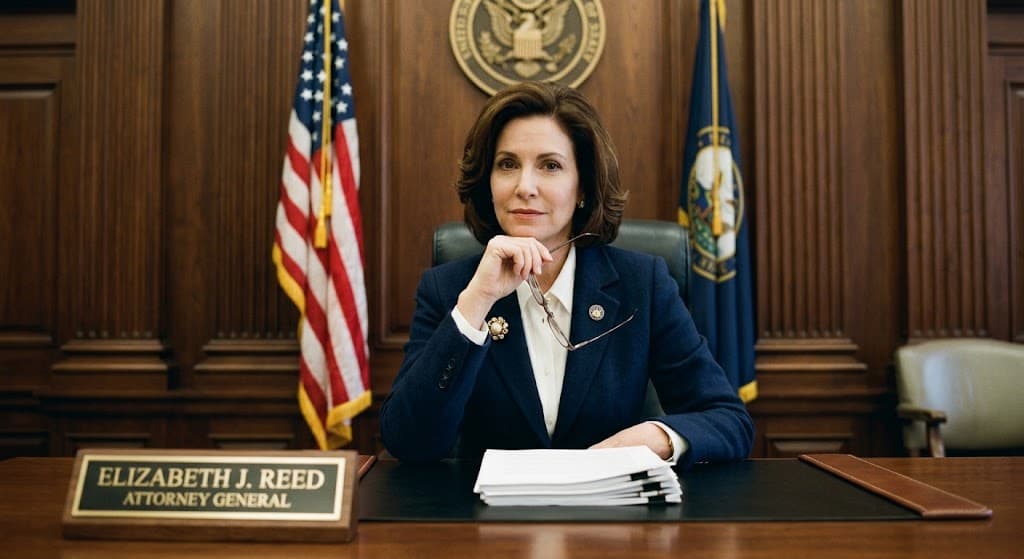
Missouri Attorney General Catherine Hanaway is sending cease-and-desist letters to every prediction market company operating in Missouri. The action names Kalshi and Polymarket specifically, asserts that their sports event contracts constitute gambling under Missouri state law, and demands that the platforms either submit to Missouri gaming regulation and taxation or face a lawsuit.
The announcement arrived on September 18, 2026. It is the 38th state or tribal enforcement action against prediction market platforms since Maryland denied Kalshi's first preliminary injunction request in August 2025. It is also the most direct acknowledgment yet from a state attorney general that the enforcement campaign is not about whether prediction markets are innovative. It is about whether the state receives tax revenue from the gambling activity occurring within its borders.
"I think it siphons a lot of money from a lot of the other sports betting sites that have to pay tax in Missouri," Hanaway said.
That sentence is the operational core of the cease-and-desist, stated plainly. Missouri has licensed sportsbooks. Those sportsbooks pay state taxes. Prediction market platforms are taking the same bets on the same sporting events without paying those taxes. The attorney general's office has decided to do something about it.
What Hanaway Is Actually Arguing
The legal argument Missouri is advancing is structurally identical to the argument that has produced 37 adverse judicial decisions against prediction market platforms across 13 states and three federal circuits.
Hanaway said the companies' fee structures differ from traditional sportsbooks but that the difference is legally irrelevant. The activity is classified under Missouri law by what it is, not by how the operator charges for it.
"The way that they take contracts, as what they would call them, I call them bets online on sporting events is just like how FanDuel and others do it," she said. "Even though their fee structure might be a little bit different, it still fits four square the definition of gambling in Missouri."
The Ninth Circuit used almost identical reasoning two days before Hanaway's announcement. The court's ruling in Blue Lake Rancheria v. Kalshi, Inc., issued on September 16, held that IGRA's analysis is functional rather than definitional. The court does not ask what the operator calls its product. It asks what the product does. A user pays money, a sporting event occurs, and the user receives money if they predicted correctly. The label applied to that sequence does not change the sequence.
Hanaway is running the same functional analysis under Missouri state gambling law rather than IGRA. The conclusion is the same.
The Safeguards Argument That Every Regulator Is Now Raising
Alongside the classification argument, Hanaway raised two specific regulatory failures that prediction market platforms have not addressed: age verification and insider trading.
"They don't have any kind of age verification, so we are concerned that they have people playing that are not of age, and the fact that we have seen in some jurisdictions some sort of insider trading, where people have more knowledge on what the outcome might be," she said.
Both concerns are well-documented. Polymarket's community channel documented this week that Apple Pay and card deposits are not functioning, that open orders are not displaying correctly, and that the platform has no mechanism to verify the age of users accessing it through its standard interface. Kalshi's advertising, which the Ninth Circuit reproduced in its September 16 opinion, announced "Sports Betting [Is] Legal in all 50 States on Kalshi" on a sponsored Instagram post. An advertisement on a social media platform with no age gate, for a product with no age verification, is the precise vulnerability Hanaway is describing.
The insider trading concern is grounded in documented enforcement history. Kalshi faced an enforcement action from the CFTC earlier this year over insider trading in its event contract markets. The same information asymmetries that make prediction markets attractive to sophisticated traders, access to non-public information about political decisions, regulatory outcomes, or sporting events, are the asymmetries that create insider trading risk. Missouri's attorney general is raising this as a consumer protection argument. The CFTC's own enforcement record confirms the concern is not hypothetical.
Licensed sportsbooks in Missouri are required to maintain age verification systems, submit to state auditing, and comply with anti-money laundering requirements. Prediction market platforms maintaining none of these requirements while competing for the same sports betting dollars is the argument every state regulator has been making. Missouri is the latest to formalize it.
The Revenue Argument That Will Drive Settlement Negotiations
Hanaway said her office has seen settlements between prediction market companies and other states and that settlement is the preferred outcome in Missouri as well. Her office's stated goal is to bring the platforms under Missouri gaming law and require them to be taxed as gambling operators.
The tax question is the most durable element of the enforcement campaign. State legislators and attorneys general who might be agnostic on the philosophical question of whether event contracts are financial products or gambling are not agnostic on whether those products should generate state tax revenue when they compete directly with licensed gambling operators that do generate that revenue.
Missouri voters approved legal sports betting in November 2022. The framework that followed created a licensing system, a tax structure, and a regulatory apparatus. DraftKings, FanDuel, BetMGM, and the other licensed operators that entered Missouri under that framework pay taxes on their Missouri revenue. They maintain age verification. They submit to state oversight.
The prediction market platforms that have entered Missouri since Kalshi won its CFTC battle are competing in the same market without paying into the same system. From the perspective of a state attorney general, this is not a novel legal question. It is a tax equity question with an obvious answer.
How Missouri Fits the National Pattern
The comprehensive judicial record of prediction market litigation now stands at 37 decisions favoring states and tribes against 6 favoring the platforms. The 37 adverse decisions have come from courts in Maryland, Massachusetts, Michigan, Nevada, New York, Ohio, Utah, Washington, Wisconsin, Connecticut, Montana, Iowa, and Arizona, as well as from the Second, Sixth, Ninth, and Tenth Circuits at the federal appellate level.
Missouri is not filing into a legal vacuum. It is filing into a framework that has been built by 13 other states over 13 months, with a judicial track record that has produced an 86 percent success rate for the state and tribal position on preliminary injunctions, temporary restraining orders, and stays pending appeal.
The geographic spread of the adverse rulings is the pattern's most significant feature. This is not a coastal regulatory phenomenon or a gambling-state phenomenon. Ohio is not a coastal state. Utah is among the most conservative states on gambling policy in the country. Iowa and Montana do not have the lobbying infrastructure of Nevada or New Jersey. Courts in all of them have reached the same conclusion when asked whether prediction market platforms can operate in their states over the objection of state gaming regulators.
Hanaway said she anticipates the platforms will sue Missouri in response to the cease-and-desist. She described the preemption argument they will likely advance.
"Chances are they may sue us once they get this cease-and-desist letter, because these companies argue that they are regulated at the federal level as a commodity, like the corn and bean futures or farmers' trade, that they have the same regulatory entity, and we say not quite like that," she said.
The CFTC preemption argument has been tested in courts across 13 states and three federal circuits. It has won six times. It has lost 37 times. The Ninth Circuit's September 16 ruling added a specific dimension that makes the preemption claim harder to advance: the court held that the Commodity Exchange Act's "exclusive jurisdiction" provision is not a broad grant of authority that overrides all other federal law, and that CFTC authorization does not resolve the IGRA analysis. By extension, it does not automatically resolve the Missouri gaming law analysis either.
What Michigan Established That Missouri Will Inherit
Michigan is the state that has built the most comprehensive adverse ruling record in this litigation. Michigan Federal Court denied temporary restraining orders or preliminary injunctions to Polymarket, Robinhood, and Coinbase in 2026. Michigan State Court entered a temporary restraining order against Kalshi in June and a preliminary injunction against Kalshi on September 1. Five separate rulings against four different platforms in one state over six months.
Missouri's cease-and-desist arrives two weeks after the Michigan State Court's September 1 preliminary injunction against Kalshi. Missouri will not be litigating from scratch. It will be filing into a legal landscape where the preliminary injunction analysis has been worked through in at least eight other states, where circuit courts have weighed in on the federal preemption question, and where the functional gambling test that Hanaway is applying has been applied, and accepted, by courts at multiple levels of review.
The precedent base that Michigan and the other early-moving states built is now available to every state attorney general who files. Missouri will benefit from 13 months of litigation that has already produced a usable template: assert state gambling law jurisdiction, argue the functional test, resist the preemption claim, request a preliminary injunction to stop operations while the case proceeds. The courts have been granting that framework at an 86 percent rate.
The CFTC's Position and Its Limits
The CFTC issued a final rule in late 2025 authorizing event contracts on political and sports outcomes. That rule is the regulatory foundation on which Kalshi and the other platforms have built their legal defense. The argument is that a federal agency with exclusive jurisdiction over commodity futures and event contracts has authorized this activity, and that authorization preempts inconsistent state law.
The argument has a textual problem that courts have been identifying consistently. Section 2 of the Commodity Exchange Act states that "nothing" in it "supersede[s] or limit[s]" federal courts' jurisdiction. The Ninth Circuit read that provision alongside the Act's reference to "other regulatory authorities" and concluded, applying the canon of ejusdem generis, that "exclusive" jurisdiction means jurisdiction exclusive of other financial regulators like the SEC, not jurisdiction exclusive of all other law that might govern the same activity.
If the CEA's jurisdiction is not exclusive in the absolute sense, CFTC authorization of event contracts does not preempt state gaming law. That is the legal conclusion 37 courts have now reached in different forms, across different state and federal frameworks, over 13 months of litigation.
The CFTC has defended its own rulemaking in court and has been on the losing side of preliminary injunction analysis in Wisconsin, New York, and Arizona. A regulatory agency whose emergency motions are being denied while it argues for the preemptive effect of its own rules is arguing from a weakened institutional position.
Missouri's cease-and-desist will test whether that position has strengthened since the Ninth Circuit's IGRA ruling or weakened further.
The Tribal Dimension That Missouri Has Not Yet Raised
Hanaway's announcement does not reference the Indian Gaming Regulatory Act or the interests of Missouri's tribal nations. That is a notable absence given what happened 48 hours before her announcement.
On September 16, the Ninth Circuit reversed its prior denial of a preliminary injunction on IGRA claims, holding that Kalshi's sports event contracts are Class III gaming under IGRA when entered into from tribal territory, and that CFTC authorization does not resolve the IGRA analysis.
Missouri has eight federally recognized tribes. The Eastern Shawnee Tribe of Oklahoma, the Quapaw Nation, the Osage Nation, and others with connections to Missouri territory have interests in this litigation that the state attorney general's action does not address but that the Ninth Circuit's ruling has made legally significant at the national level.
The roundtable that 17 tribal nation organizations held with CFTC Chairman Michael Selig earlier this month produced an explicit litigation commitment from the Oklahoma Indian Gaming Association. OIGA stated publicly that it expects the CFTC's rulemaking to produce additional litigation and that the CFTC's approach is "arbitrary, capricious, and not in accord with law." The tribes are pursuing federal-level challenge to CFTC authority while state attorneys general like Hanaway are pursuing state-level challenges through cease-and-desist enforcement.
The two tracks are converging. A court that accepts the tribal argument and a court that accepts the state attorney general's argument are reaching the same practical outcome: the platforms cannot operate in those jurisdictions under their current regulatory structure.
The Tax Argument as the Durable Core
Every other argument in the Missouri enforcement action, the functional gambling test, the age verification failure, the insider trading concern, the safeguards deficit, is a legal argument about how to classify the platforms' products.
The tax argument is different. It is a policy argument about who pays for the regulatory infrastructure that makes legal sports betting possible in Missouri, and whether companies that benefit from that infrastructure by competing with licensed operators should contribute to it.
Missouri's licensed sportsbooks paid to enter the state market, comply with its regulations, and contribute to its tax base. They did this because Missouri voters approved legal sports betting through a ballot initiative. The prediction market platforms entered the same market without that process, under a federal authorization that Missouri's attorney general is contesting, and have been capturing sports betting revenue without paying into the state system that governs sports betting.
Hanaway's statement that the platforms "siphon" money from taxed operators is the most politically resonant argument in the cease-and-desist because it is not abstract. It is a revenue question that every Missouri legislator and every licensed gaming operator in the state has an interest in. The prediction markets industry has won the public argument that its products are innovative financial tools. It has not won the political argument that innovative financial tools should be exempt from the tax obligations that their direct competitors carry.
Missouri is number 38 in the enforcement sequence. The sequence does not appear to be ending.
Rate this piece — one tap, no signup
Editor-in-Chief
Ezekiel Njuguna is the Editor-in-Chief of Predictions Market Fans, where he helps make probabilistic thinking clear and practical for readers. With a strong focus on quantitative research and market mechanics, he leads the site’s technical guides, including a detailed breakdown of Kalshi Combos. His writing connects economic theory with real-world trading strategy, including practical discussions of how yield-bearing tools can support active bankroll management.
The Weekly Signal
Every Friday — the week's sharpest prediction market analysis, forecasting insights, and data-driven commentary. No noise.
Disclaimer: This content is for informational and educational purposes only. It does not constitute financial advice, investment recommendations, or trading guidance. Prediction market participation involves risk of loss. Always conduct your own research before making any financial decisions.