2026 Midterm Elections: House, Senate & Governor Prediction Market Odds
Live odds: Democrats 88.5¢ for the House, Senate a coin flip. What the retirement data, the four toss-up races, and the CLARITY Act stall mean for the midterms.

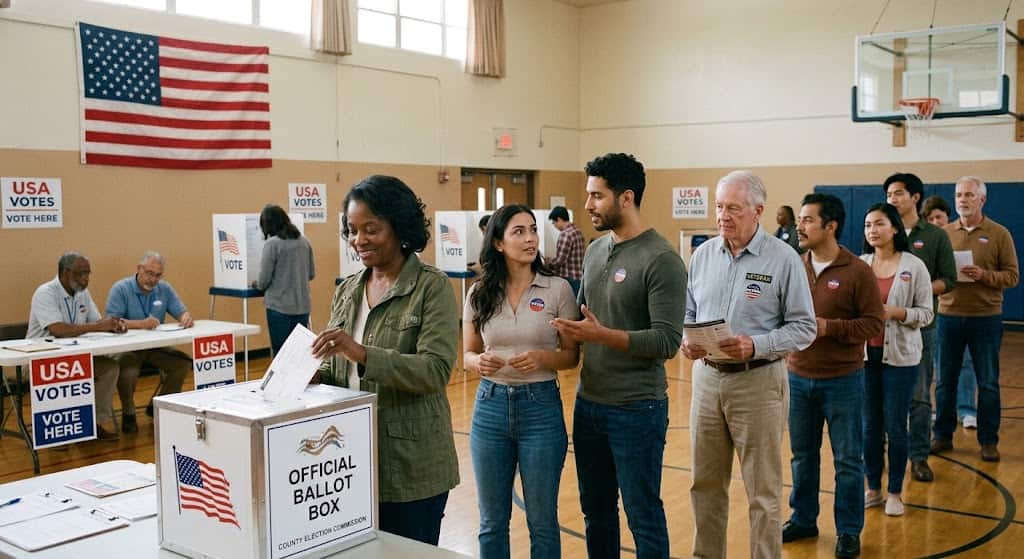
Seventy-four days from now, November 3, 2026, every seat in the House, 35 seats in the Senate, and 39 governorships go before American voters. The midterm election will decide who controls Congress, which party sets the agenda in Washington, and what happens to the pieces of legislation currently stuck in the Senate.
Prediction markets are already pricing it, and the picture they paint is sharp: Democrats are heavy favorites to flip the House, and the Senate is a coin flip.
As of August 20, 2026, the live Polymarket numbers are:
House control — Democrats 88.5 cents, Republicans 12.5 cents. The market has moved in Democrats' favor all year and now implies roughly an 89% chance of a House flip, with more than $5 million in total volume traded on the contract.
Senate control — Democrats 50.5 cents, Republicans 49.5 cents. A true coin flip, with the odds having seesawed through the summer as primaries produced their nominees.
Governorships — Democrats to hold more, 49.5 cents; Republicans more, 27.5 cents; a tie, 11.5 cents. (Liquidity here is thin, treat these as indicative, not tradable.)
A Republican trifecta with a Senate supermajority — 3 cents. The long-shot contract is priced almost entirely off.
Here is what the markets are actually telling you, and how to read it without getting fooled.
The House: Why the Market Is More Confident Than the Forecasters
Republicans currently hold a razor-thin House majority of roughly 220 seats against 215 for Democrats, with vacancies. Democrats need a net gain of just 3 seats to take the 218 required for control.
The structural story is Republican retirements. The 2026 cycle has produced 57 House retirements, 36 Republicans versus 22 Democrats, the second-highest departure count since 1992, and a single-party record that breaks the 34 Republican retirements of 2018. That was the cycle immediately before the 2018 wave that handed Democrats 40 seats. The historical pattern is unambiguous: when one party retires at a record rate in a midterm, the map tilts against them.
Forecasters agree on the direction but not the magnitude. The White House's internal model gives Democrats roughly a 69% chance of winning the House. Ipsos ran five independent projection models, and all five project Republicans finishing below 218. Sabato's Crystal Ball calls the House likely to flip. The prediction market at 88.5 cents is meaningfully more confident than the polling-based models, a gap worth understanding. Prediction markets price not just the polls but the structural edge: the retirement numbers, the fundraising disparities, and the historical midterm penalty for the president's party. When the market diverges from forecasters, it is usually the market that moves toward reality.
The Senate: The Hardest Math in American Politics
The Senate is the opposite story: a favorable map for Republicans, an expensive one for Democrats, and a market stuck at a coin flip.
The current split is 53 Republicans to 47 Democrats and independents. Thirty-five seats are up, and 22 of them are held by Republicans, including two special elections in Florida and Ohio, seats vacated when Marco Rubio became Secretary of State and J.D. Vance became Vice President. On paper, the map favors the GOP.
But the market is not convinced. Democrats need a net gain of 4 seats to reach 51, a 50–50 tie would leave Vice President Vance casting the deciding vote and the GOP in control. The four races that decide everything, rated toss-ups by Cook, Sabato, and Inside Elections:
North Carolina (open, Republican-held): Former Governor Roy Cooper, the Democratic nominee, faces Trump-endorsed former RNC Chairman Michael Whatley. Cooper's entry made this the most expensive Senate race in history, and it is now the single most likely Democratic pickup.
Michigan (open, Democratic-held): Gary Peters retired. State senator Mallory McMorrow dropped out in July, and Wayne County health director Abdul El-Sayed won a bruising primary by 15,000 votes against establishment favorite Haley Stevens. He faces former Rep. Mike Rogers in a state Trump won narrowly in 2024.
Georgia (Democrat-held): Jon Ossoff is the most endangered Democratic incumbent in the country, defending a seat in a state Trump won, though his odds improved when Governor Brian Kemp declined to run.
Maine (Republican-held): Susan Collins, the only Republican defending a seat in a state Kamala Harris won, faces former Governor Janet Mills in what has already drawn $8.9 million in TV ad spending.
Beyond the toss-ups, Alaska (incumbent Dan Sullivan vs. former Rep. Mary Peltola, with ranked-choice voting in play) and the Ohio special (appointed Sen. Jon Husted vs. three-time winner Sherrod Brown) are rated Lean Republican but are live swing opportunities for Democrats.
Here is the arithmetic the market is wrestling with: Democrats can win every toss-up and still fall short of 51 unless they also take Alaska or Ohio. The coin flip price of 50.5 cents is the market's way of saying the path exists but every step on it runs through states Trump won.
Eleven senators are retiring, four Democrats and seven Republicans, the most in a single cycle since 1996. The retirements that matter most for prediction market traders are the ones already shaping policy: Thom Tillis of North Carolina and Cynthia Lummis of Wyoming are both leaving, and both were central to the failed CLARITY Act negotiations this summer, Tillis co-authored the ethics counter-proposal, Lummis brokered the original deal.
Why the Midterms Are Already Moving Policy Markets
This is the connection most midterm coverage misses: the election is not just a market, it is an input into every other market.
The CLARITY Act, the crypto market-structure bill we covered as it collapsed from 82% to the low 20s, is stalled precisely because of the midterms. Senate Democrats refused a pre-recess vote, Majority Leader Thune's blunt explanation was "the Dems are insistent on no Clarity vote", and the reason is the election: Democrats who would otherwise support the bill see no upside in handing the crypto industry a win before November, and a lame-duck path grows harder with every day of campaign season. If the House flips and the Senate coin flip lands Democratic, the CLARITY Act as written is effectively dead, and the 2027 agenda gets written by the other party.
The same logic applies to the Fed's independence debate, the appropriations fights coming in October, and the ongoing CFTC-versus-state battles over prediction market regulation. A Democratic House with committee gavels would change the pressure on Kalshi, Polymarket, and the event-contract industry directly. The midterm markets are, in effect, the underlying asset for the policy markets.
How to Trade the Midterm Markets
A few practical notes if you're trading this cycle:
House control is a crowded, confident trade. At 88.5 cents, the market is pricing a near-certain flip. The question is not whether the Democrats win the House, it is the margin, which is where the seat-count and trifecta contracts come in. Those contracts are thin (some have traded just a few hundred dollars all-time), so slippage will eat your edge. If you want House exposure, the control contract is the liquid one.
The Senate is where the value debate lives. A 50.5/49.5 coin flip on a market with millions in volume is a genuine two-way market, and it will swing hard on each of the four toss-up races' polling and debate performances through October. The 270toWin aggregation of prediction markets currently projects 50 Democrats, 48 Republicans, and 2 independents, exactly the tie scenario the market is balancing.
Use the structure, not just the direction. Kalshi runs its own House and Senate control contracts in its election category, and prices between the two platforms have diverged by several cents at times this summer. As we covered in our arbitrage guide, those gaps close, slowly enough to matter, quickly enough to move.
Respect the calendar. The Senate returns September 14 for roughly two weeks of floor time before campaign season consumes it. Every procedural vote between now and November, including the September 15 CLARITY cloture vote, is a data point for these markets. The general guide to trading political events covers how to position across the full cycle.
Bottom Line
The 2026 midterms are the largest prediction market event of the year that is still open, bigger than any single bill, any IPO rumor, or any Fed meeting, because it sets the table for all of them.
Right now the markets say: House flips to Democrats (88.5 cents), Senate stays a coin flip (50.5 cents), governorships roughly split, trifecta nearly impossible. If you believe the retirement data and the historical midterm penalty, the House side has already moved; if you believe the Senate map math, the coin flip is the trade that will move.
November 3 is 74 days away. The markets will update on every primary, every debate, and every procedural vote between now and then, and they will be right more often than the polls.
Rate this piece — one tap, no signup
Editor-in-Chief
Ezekiel Njuguna is the Editor-in-Chief of Predictions Market Fans, where he helps make probabilistic thinking clear and practical for readers. With a strong focus on quantitative research and market mechanics, he leads the site’s technical guides, including a detailed breakdown of Kalshi Combos. His writing connects economic theory with real-world trading strategy, including practical discussions of how yield-bearing tools can support active bankroll management.
The Weekly Signal
Every Friday — the week's sharpest prediction market analysis, forecasting insights, and data-driven commentary. No noise.
Disclaimer: This content is for informational and educational purposes only. It does not constitute financial advice, investment recommendations, or trading guidance. Prediction market participation involves risk of loss. Always conduct your own research before making any financial decisions.