Pronostyx vs Kalshi (2026): Which Prediction Market Should You Use?

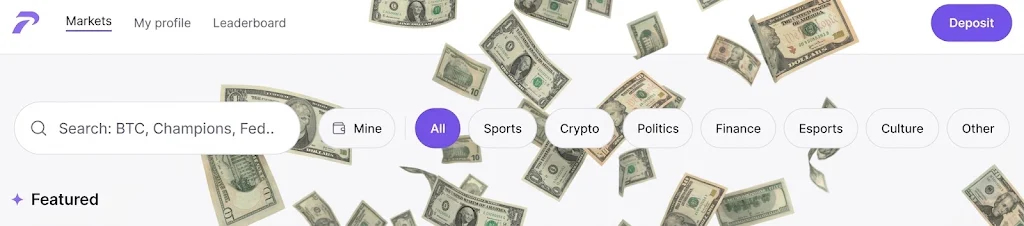
Most prediction markets were built with American sports fans in mind. If you follow Liga MX, Copa Libertadores, or LaLiga, you know the routine. You scroll past NFL props and NBA futures, hunting for the one match you care about.
Pronostyx is trying to close that gap. It’s a prediction market built around Spanish-language sports and the teams and tournaments that fans in Mexico, Spain, Argentina, and across Latin America follow every week. Kalshi is the best-known regulated name in U.S. prediction markets, with a menu that runs from elections to weather.
So which one should you use? It depends on where you live and how you like to fund your trades. I’ll give you the short version now and the details below. I signed up for Pronostyx, funded it, placed a trade, and tested a withdrawal. Then I compared what I found with the public details on Kalshi. Both platforms let you trade on real-world outcomes, so the real comparison comes down to access, cost, trust, and clarity. Let’s go through them.
Two platforms, two different audiences
Kalshi was built for the U.S. market. It operates as a designated contract market regulated by the Commodity Futures Trading Commission. It takes U.S. dollars through debit cards, online bank connections, and wire transfers, and it also accepts USDC.
Pronostyx speaks a different language, and I mean that literally. The site and app run in Spanish and English. The currency is USDC, a digital coin pegged to the U.S. dollar, and it runs on the Base network. You can’t pay with a card or bank transfer directly on Pronostyx. You bring the crypto.
That difference matters more than any single feature. A U.S. user with a debit card and no crypto history will find Kalshi easier to start with. A fan in Guadalajara who already holds USDC and wants to trade Liga MX will probably find Pronostyx the better match. Figure out which group you belong to, and the rest of this comparison gets simpler.
Signing up takes about a minute on Pronostyx
When I tested Pronostyx, sign-up took about a minute. You log in with Google or an email address, and the platform creates a wallet for you in the background. You don’t install a browser extension, write down a seed phrase, or hunt for a wallet app. Experienced crypto users can click “Connect my wallet” instead and use their own.
That first step is where many crypto products lose people. Pronostyx skipped it.
Kalshi’s sign-up is also straightforward. You create an account, verify your identity, and fund it in dollars. The identity check adds a few minutes, but Kalshi has to know who its customers are before you can deposit or trade.
Both platforms set the minimum age at 18. When you sign in to Pronostyx, you confirm that you’re legally allowed to use the service where you live. Read that part. It matters.
Switching languages is easy, too. On Pronostyx, you can change between Spanish and English and between light and dark mode in the sign-in window or at the bottom of your portfolio. The setting stayed put when I came back.
Funding your account: the USDC step
This is where you need the most care. Pronostyx takes USDC on Base only. You can send it from a wallet like MetaMask or Coinbase Wallet, or withdraw it from an exchange such as Binance or Kraken. Choose Base as the network every time.
Here’s the trap. If you send USDC on another network, the funds may never arrive. The deposit screen warns you, but a warning doesn’t stop a rushed click. So send a small test amount first, watch it arrive, and then send the rest. Check the network name twice before you press send. I’ll keep repeating that, because it’s the mistake that costs people money.
You also need a small amount of ETH on Base. Your bets are in USDC, but the network fee is paid in ETH. The deposit screen shows a separate gas line, so you can see the gap before you start.
I sent $100 in USDC from MetaMask. It showed up in about 30 seconds and appeared in my ledger. I also sent $1 in ETH for network fees. The minimum deposit can be as low as $10.
Kalshi’s funding path is shorter for U.S. users. You can fund with a debit card, a bank connection, a wire, or USDC, and its minimum deposit is $10. The welcome offer comes with conditions. According to recent reviews of the offer, new users must deposit at least $10 and settle $25 in qualifying trades within seven days to unlock $60 in bonus credits. Those credits also expire after seven days. Read the fine print before you chase any promotion.
Your money: available vs. open
Pronostyx shows two balances, and it’s worth learning the difference. Available is what you can spend or withdraw right now. Open, sometimes called “in positions,” is money sitting inside markets that haven’t settled.
Open money still belongs to you. It just can’t leave until the market settles or you sell the position. The portfolio screen shows your total, how it has moved, your open positions, and a ledger of every deposit, trade, payout, and withdrawal. I liked having one record. At any point, I could see where each dollar sat.
How a Pronostyx trade works
Every market asks a yes-or-no question that can be checked on a set date. You buy Yes or No. If your side wins, each contract pays $1. If it loses, the contract is worth zero.
Pronostyx’s own example asks whether Bitcoin will close above $95,000 on December 31. In that example, Yes costs 26 cents and No costs 78 cents. With $10 at 26 cents, you buy about 38.46 contracts. If Yes wins, you collect $38.46, a profit of $28.46. If it misses, you lose your $10.
The trade ticket shows that payout before you confirm. It lists the amount, the price of Yes, the number of contracts, and what you get if you’re right. My first trade was $5 on a Spanish politics market asking whether the Supreme Court would formally place Pedro Sánchez under investigation before the end of 2027. I knew my possible return before I pressed the button. That matters a lot when you’re new.
Then there’s the sell side. You can sell all or part of a position at the price the book pays at that moment. When I opened the sell tab on a market where I held nothing, I didn’t get an error. The screen explained that I had no contracts to sell, showed what each side paid right now, and told me to buy the side I believed in first. That small message explains prediction markets better than many tutorials do.
One point to keep in mind. A 26-cent price implies roughly a 26 percent chance. Before fees, you only come out ahead if that event happens more often than the price suggests. The platform shows the price. It doesn’t tell you whether the price is a bargain. That part is your call.
Read both buy prices before you trade
The big percentage on a market is a reference point. It summarizes the middle of the order book. The buy buttons show the real prices, and those two prices don’t always add up to 100 cents. In Pronostyx’s Bitcoin example, 26 cents plus 78 cents equals 104 cents. That 4-cent gap is a real cost if you buy both sides, and it changes from market to market.
My tip: look at both buy prices together before you trade, especially in smaller markets. A wide gap usually means a thin market, and getting in and out costs more. I’d rather you see that before you deposit than after.
Kalshi has the same dynamic, and its liquidity varies by contract. Big events like elections, championship futures, and major economic releases usually have deeper order books than niche markets. Check the spread and the available volume before you trade on either platform.
Fees: what you actually pay
This is where the platforms look most different on paper.
On the Pronostyx screens I reviewed, I didn’t find a platform fee for trading, deposits, or withdrawals. The cost you do pay is the network fee, paid in ETH on Base. If you buy crypto with a card inside MetaMask or Coinbase Wallet, the wallet sets its own price, so compare quotes before you confirm. If you move money off an exchange, check that exchange’s withdrawal fee too.
Kalshi’s fees are built into its trading structure, and it shows you what you’ll pay before you confirm. Fees change with the contract price. They’re highest near 50 cents, where the outcome is most uncertain, and they drop toward the extremes. Makers, who place resting orders that wait to be matched, pay less than takers, who fill right away against orders already on the book. If you trade often on contested markets, those fees add up.
Whichever platform you choose, add up the full cost of a trade before you decide. That means the fee, the spread, and any funding costs together. The headline number rarely tells the whole story.
Payouts and withdrawals
Kalshi lists most of its withdrawal methods at about 30 minutes. That’s quick, and it’s a real strength for U.S. users who want their money back fast.
Pronostyx withdrawals run from the wallet under “Withdraw.” You choose an amount and a destination address, and only available funds can leave. I withdrew $30 to MetaMask on Base, and it arrived in about 30 seconds. Like deposits, the network has to match. If you send to an exchange, confirm that it accepts USDC on Base before you send.
Winnings take one extra step on Pronostyx. When a market settles, winning contracts become ready to claim. You sign the claim from the market page or your portfolio, and the money moves to your available balance. It stays inside the contract until you claim it, so check your portfolio after each settlement.
Markets: broad versus focused
Kalshi wins on breadth. Its categories include sports, politics, economics, culture, climate and weather, and crypto. Its sports markets range from NFL futures and NBA Finals to moneylines, spreads, and player props. If you want to trade on whether a named hurricane makes landfall, or whether Los Angeles runs above average in a given month, Kalshi has those contracts.
Pronostyx is narrower, and that’s the point. Its main categories are Sports, Finance, Politics, Crypto, Esports, Culture, and Other. The sports focus is Spanish-speaking football: Liga MX, LaLiga, Copa Libertadores, and national team matches, plus boxing and Caribbean baseball. The menu is built around the teams and tournaments Spanish-speaking fans talk about every week. It isn’t a general list translated after the fact.
Here’s how I’d think about it. If you want a wide range of topics and a deep bench of U.S. data releases, Kalshi is the bigger shelf. If you want Spanish-language sports with a clear trade ticket, Pronostyx is where I’d start.
Trust, regulation, and the Utah case
This section matters, because the regulatory question shapes everything else about a prediction market. Recent news has made that very clear.
Kalshi is regulated by the CFTC, and that federal license sits at the center of its business. Its position rests on that one license, and that’s a big reason Kalshi has grown into a major U.S. platform. But state governments don’t all accept that a federal license overrides their gambling laws.
In early November 2026, Utah indicted the two founders of Kalshi on 13 criminal counts. The most serious is a top-level offense punishable by up to 15 years in prison, and it falls under Utah’s racketeering statute, a law usually used against organized crime. The case started with an undercover officer. He opened an account in September using a Utah address, phone number, and debit card. Over eleven days, he placed twelve bets on sports, including a Cowboys vs. Giants game and a Real Salt Lake soccer match. The app asked him to confirm he was in Utah before his $10 bet, and the bets went through.
These are charges, not convictions. The founders will have the chance to contest them in court. Still, the case shows why state rules matter alongside federal licenses. Several large sportsbooks, including DraftKings, FanDuel, and Fanatics, pulled sports and political betting from Utah in the days after the charges. Kalshi has kept operating there. Reporting on the case argues that much of the company’s value, which that reporting puts at about $40 billion, depends on that single federal license holding up everywhere.
Now, Pronostyx. It’s operated by Pelara Digital LLC, a Wyoming limited liability company. Its terms require you to be 18 and legally allowed to use the service where you live. We didn’t find a stated regulatory position on the pages we reviewed, so the legal question falls on you. Check your local rules before you deposit on any prediction market, this one included.
Settlement rules are the other half of trust. Kalshi uses official data sources for categories like economics, weather, and sports. Pronostyx uses the Pyth price oracle for crypto markets and official results for sports, and it says it doesn’t decide who wins. Read how each market settles before you trade. Clear rules keep a market honest.
Support and the everyday experience
Kalshi’s app earns strong ratings: 4.8 out of 5 on the App Store from over 500,000 reviews, and 4.7 on Google Play from about 110,000. Its live chat runs from 8 a.m. to 3 p.m. Eastern and may require a funded account. There’s no phone line, but email and Discord are available. Strong app, limited chat hours.
Pronostyx handles support through email at [email protected]. In my test, the reply arrived in under two minutes. That matters when a deposit is stuck and you need an answer now. The trade ticket, sell panel, and portfolio are clean, and the interface works in both languages. The leaderboard adds some fun, since it scores traders for executed dollars rather than for hype.
Pronostyx vs Kalshi at a glance
Factor | Pronostyx | Kalshi |
|---|---|---|
Operator | Pelara Digital LLC (Wyoming) | Kalshi, a CFTC-regulated designated contract market |
Funding | USDC on Base | Debit card, bank, wire, or USDC |
Minimum deposit | From about $10 | $10 |
Platform fees | None listed on the screens we reviewed | Per-contract trading fees that vary with price |
Network fees | Paid in ETH on Base | Depends on funding method |
Withdrawal speed | About 30 seconds in our test | Most methods about 30 minutes |
Sign-in | Google, email, or your own wallet | Account plus identity verification |
Market focus | Spanish-language sports, plus finance, politics, crypto | Broad: sports, politics, economics, weather, culture, crypto |
Regulation | No stated regulator on the pages we reviewed | CFTC-regulated |
Support | Email; reply under two minutes in our test | Live chat (limited hours), email, Discord |
Best for | Spanish-speaking sports fans who hold USDC on Base | U.S. users who want the widest menu and bank funding |
Who should pick which
Pick Kalshi if you live in the U.S., want to fund with a debit card or bank account, and want the biggest menu of topics. Its app is well rated, its regulated status is the strongest part of its pitch, and its support hours are limited but real. State rules can shift, so check whether your state allows its markets before you deposit.
Pick Pronostyx if you speak Spanish, follow Spanish-language football or boxing, and already hold USDC or are ready to learn the Base network. The trade ticket shows payouts before you confirm, the sell panel teaches you how exits work, and sign-up takes about a minute.
Some people will use both. If you do, keep a separate record of each account and check the rules on every market you trade.
Ready to try Pronostyx?
If you want to see it for yourself, the path is short.
Sign in with Google or your email address using this link. Your wallet gets created for you.
Send a small test deposit of USDC on Base, and add a few dollars of ETH for network fees.
Open a market and read both buy prices and the payout preview before you trade.
Start with a small trade, such as $5 or $10, and check your portfolio once it settles.
Registering takes about a minute, and you don’t need to enter a card. You can browse markets, prices, and the leaderboard before you create an account. All you need to bring is USDC on Base.
Register on Pronostyx: [https://pronostyx.com/]
Rate this piece — one tap, no signup
Editor-in-Chief
Ezekiel Njuguna is the Editor-in-Chief of Predictions Market Fans, where he helps make probabilistic thinking clear and practical for readers. With a strong focus on quantitative research and market mechanics, he leads the site’s technical guides, including a detailed breakdown of Kalshi Combos. His writing connects economic theory with real-world trading strategy, including practical discussions of how yield-bearing tools can support active bankroll management.
The Weekly Signal
Every Friday — the week's sharpest prediction market analysis, forecasting insights, and data-driven commentary. No noise.
Disclaimer: This content is for informational and educational purposes only. It does not constitute financial advice, investment recommendations, or trading guidance. Prediction market participation involves risk of loss. Always conduct your own research before making any financial decisions.