Polymarket Outages: Why Traders Are Losing Money When the Platform Goes Down

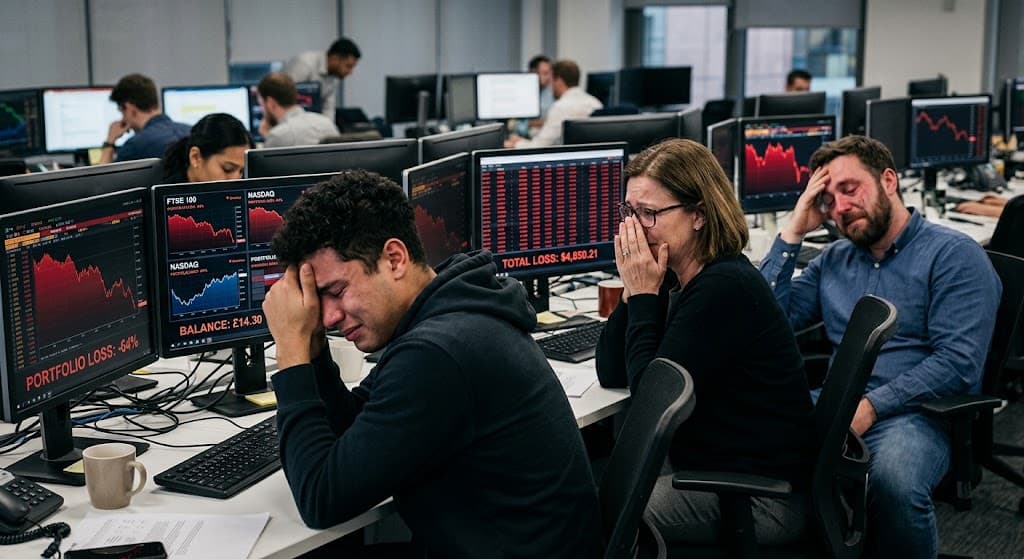
An analysis of the Polymarket outage record reveals a striking statistic: during the final week of August and the first week of September 2026, the platform suspended trading operations on at least ten separate occasions. These disruptions were not characterized by intermittent latency spikes or degraded performance, but rather by complete operational halts that rendered order execution, position visibility, and cancellation functions entirely unavailable to users.
Ten times in one week, on a platform that processed over one billion dollars in annualized revenue and recently raised at a $21 billion valuation.
Sit with that combination for a moment. The platform that attracted ICE as a backer, that generated market depth accurate enough to outperform major polling aggregators during the 2024 election cycle, and that just closed a round led by 1789 Capital, cannot stay online reliably during a week of normal trading. Both things are true simultaneously. And the gap between them is costing users real money.
What Is Actually Happening
The outages have been documented in enough detail across enough users that the pattern is clear.
Order books freeze. Positions disappear from the interface. Balances display incorrectly. Orders submitted during normal operation do not appear in the book. The platform has gone completely dark during live events, which is the worst possible timing for a prediction market because the event is unfolding and users need to manage positions based on real-time information.
One user described being caught in two separate outages on the same day while carrying open orders worth $15,000 and $12,000 respectively. Neither could be canceled. The price moved against both positions. The platform came back online and the orders filled at stale prices. The loss was not the product of a bad trade. It was the product of an infrastructure failure.
A second user reported that after one outage, Polymarket did not clear the order book before reopening. Stale orders placed before the halt were still sitting in the book when trading resumed. Those orders were priced relative to a market that no longer existed. Anyone on the other side of those orders got filled at prices that reflected the pre-outage state of the world.
The order management system is failing in both directions. Users cannot cancel bad orders during outages. And when trading resumes, those orders do not expire. They execute.
The Specific Failure Mode That Causes the Losses
The most damaging pattern follows a consistent sequence.
A trader places a limit order at a specific price. The market begins moving against the position. The trader recognizes the problem and attempts to cancel. The platform is down. The cancellation button does nothing. The order remains active while the market continues moving. When trading resumes, the order fills at the stale price. The trader takes the full loss from the price movement during the outage plus whatever spread existed at the time of execution.
This is not a failure mode that requires much explanation. In any functioning financial market, the ability to cancel an open order is treated as a basic operational requirement. It is not optional. It is the mechanism that allows participants to manage risk in real time.
What makes Polymarket's implementation specifically dangerous is that order cancellations appear to be blocked whenever trading is blocked. The two operations are treated as equivalent by the system. But they are not equivalent. Accepting new orders and processing order cancellations are different operations with different risk profiles. A platform can rationally suspend new order entry while continuing to process cancellations. Polymarket is not doing this.
One user with a traditional finance background put the operational problem plainly: any exchange that goes down advises clients to route away. There is a standard protocol. The rate and frequency at which Polymarket completely halts, without that protocol, is not normal.
The Infrastructure Math That Explains the Pattern
The outages are not random. They are the predictable output of a specific mismatch.
Polymarket's infrastructure was built to serve a certain level of volume. The platform has grown dramatically since that infrastructure was designed. The 2024 election cycle brought volume that changed the platform's scale fundamentally. Growth continued through 2025 and into 2026. The $1 billion annualized revenue figure, reported to CNBC in June 2026, is a consequence of that growth.
Infrastructure that serves $1 billion in volume is not the same infrastructure that serves $5 billion or $10 billion in volume. Database read and write patterns change. API endpoint concurrency requirements change. Order book reconciliation logic that ran cleanly at one volume level can produce cascading delays at a higher level. State consistency across distributed systems becomes harder to maintain when the number of concurrent operations increases substantially.
The ten outages in one week are evidence that Polymarket is stress-testing its own infrastructure and the infrastructure is not passing. The engineering team is responding to incidents rather than building proactively for the next order of magnitude of growth.
One user acknowledged this generously: scaling at this speed is genuinely hard, and the volume is stress-testing the entire system. That assessment is accurate. It is also insufficient as a response for traders who took losses because of it.
What the Timing of These Outages Reveals
The platform going down during live events is the most instructive failure pattern.
A prediction market's value is most concentrated during the events it covers. A political market is most active during debates, vote counts, and major announcements. A sports market is most active during games. A financial market is most active during economic data releases. These are the moments when users need to trade, hedge, and manage positions most urgently.
They are also the moments when volume spikes sharply. An event draws users to the platform in numbers that exceed baseline activity. The order flow increases. The number of concurrent operations increases. The infrastructure load increases.
This is the pattern that has been triggering the outages. The events create the volume spikes. The volume spikes exceed what the infrastructure can handle. The infrastructure fails. Trading halts at the exact moment when users most need to trade.
A platform that goes down during quiet periods would be frustrating. A platform that goes down during live events is operationally unreliable in the specific circumstances that define its value.
Who Is Actually Taking These Losses
The affected users are not casual participants placing small wagers. They are active traders and market makers deploying meaningful capital.
The $15,000 and $12,000 frozen orders are not large by institutional standards. But they are not small either. The aggregate impact across all users caught in the same outage at the same time scales with the number of affected positions. One user estimated that the total losses from a single outage event could reach hundreds of thousands of dollars. Across ten outages in a week, the potential aggregate loss is significant.
The users who take the largest losses are the ones who rely most heavily on the platform. Market makers who hold positions across multiple contracts simultaneously, traders who carry overnight exposure, and participants who actively manage risk during events are all exposed to the same failure mode. Their dependence on the platform's reliability is the source of their value to the ecosystem, and it is also the source of their vulnerability to its failures.
The platform's growth depends on attracting exactly these users. The outage pattern is driving exactly these users to hedge with backup venues or reduce their Polymarket exposure.
The Stale Order Restart Is the Engineering Decision That Needs to Change
Of all the failure modes documented in the outage reports, the one that is most directly addressable by an engineering decision is the restart procedure.
When Polymarket resumes trading after an outage, stale orders from before the halt should not remain active at their pre-outage prices. The market has moved during the downtime. The prices in the order book reflect a market state that no longer exists. Executing against those prices does not reflect the current equilibrium. It reflects a snapshot from before the failure.
The correct behavior is to cancel all open orders when trading resumes and require users to re-enter them at current prices. This forces both sides of any potential trade to affirm their intent at the post-outage market level. It adds friction. It also prevents the execution of orders that exist only because the user could not cancel them.
Alternatively, the platform could flag stale orders explicitly and give users a window to cancel before the order book reopens. Either approach is preferable to the current behavior, which converts frozen positions into execution risk without warning.
This is not a technically complex change. It is an operational policy decision. The fact that it has not been implemented after multiple incidents suggests that the restart procedure has not been prioritized. That needs to change.
The Backup Route Problem
The advice circulating among traders who have been burned by the outages is consistent: do not rely on Polymarket exclusively. Have routes to other exchanges. Have the ability to hedge or offset positions when the platform is unavailable.
This is correct advice. It is also a meaningful statement about where the platform currently stands.
When traders need to hedge their Polymarket exposure on other platforms because they cannot trust Polymarket to be online when they need to manage risk, that is a structural reliability problem, not an acceptable feature of the platform. The users who are routing to alternatives are acknowledging that Polymarket cannot be treated as primary infrastructure. That is a constraint on how much serious capital the platform can attract and retain.
A traditional financial exchange that went down ten times in a week would face regulatory questions, participant complaints, and potential volume migration that would force engineering prioritization. Polymarket operates in a different regulatory context, which means the external pressure to fix this comes entirely from user behavior.
The users who have published their outage experiences are doing the work that regulatory feedback would otherwise do. They are documenting the failures with enough specificity to make the problem legible. They are also, by their descriptions of building backup routes and reducing exposure, demonstrating what the market response to repeated failures looks like.
What the $21 Billion Valuation Implies About the Fix
Polymarket's valuation reflects the belief that prediction markets as an asset class will grow significantly as regulatory barriers in the US come down. The US relaunch, still pending CFTC-compliant infrastructure, is the catalyst that the valuation is pricing in.
The US market, when it opens, will bring volume that dwarfs current levels. The events that will be traded, political, economic, and sports, will be covered by media that reaches tens of millions of potential users. The number of concurrent sessions, orders, and position updates will be substantially larger than what the platform is managing today.
The infrastructure that is failing under current load will not handle that order of magnitude increase without significant architectural work. The ten outages in one week are not an argument against Polymarket's potential. They are evidence of how much engineering investment is required before that potential can be realized safely.
The $21 billion valuation represents the expectation that Polymarket will build that infrastructure and will be the primary beneficiary of US market opening. The outages are evidence of how far that infrastructure currently sits from the requirement.
The Hard Implication
There is a version of this story that ends well. The engineering team priorities shift. The restart procedure gets fixed. The database architecture gets redesigned for the next order of magnitude of volume. The platform becomes reliable enough that serious traders stop building backup routes and start treating Polymarket as primary infrastructure. The US relaunch happens into a platform that can handle the load.
That outcome is possible. The revenue is real. The institutional backing is real. The engineering resources that $1 billion in annualized revenue can support are substantial.
But the current pattern contains a specific risk that the optimistic framing does not address. The next major event, the one that brings the kind of volume that tests the infrastructure most severely, will arrive before the architectural work is complete. It always does. And when it arrives, the number of users caught in a Polymarket outage, holding positions they cannot cancel while the market moves against them, will be larger than the number who were caught this week.
The traders publishing outage reports are not being unreasonable. They are not asking for perfection. They are asking for the ability to cancel an open order when something goes wrong. That is the minimum operational standard for a platform handling real capital.
Polymarket is not meeting that standard right now. And it is worth being clear about what that means. A platform that cannot cancel orders during outages is not failing at a secondary feature. It is failing at the core mechanism that allows users to manage risk. Everything else, the $21 billion valuation, the institutional backing, the accurate election markets, the billion in revenue, rests on the assumption that the platform functions when users need it to.
Ten outages in a week is evidence about how well that assumption currently holds. People will move to Kalshi.
Rate this piece — one tap, no signup
Editor-in-Chief
Ezekiel Njuguna is the Editor-in-Chief of Predictions Market Fans, where he helps make probabilistic thinking clear and practical for readers. With a strong focus on quantitative research and market mechanics, he leads the site’s technical guides, including a detailed breakdown of Kalshi Combos. His writing connects economic theory with real-world trading strategy, including practical discussions of how yield-bearing tools can support active bankroll management.
The Weekly Signal
Every Friday — the week's sharpest prediction market analysis, forecasting insights, and data-driven commentary. No noise.
Disclaimer: This content is for informational and educational purposes only. It does not constitute financial advice, investment recommendations, or trading guidance. Prediction market participation involves risk of loss. Always conduct your own research before making any financial decisions.