Polymarket’s September 19 Blackout: What Caused the Multi-Hour Order Book Crash

There is no feeling in financial trading quite like clicking a bright red button that says "Cancel All Orders" and watching absolutely nothing happen.
Your mouse clicks. The screen flickers. A little grey loading wheel spins in the corner of your browser.
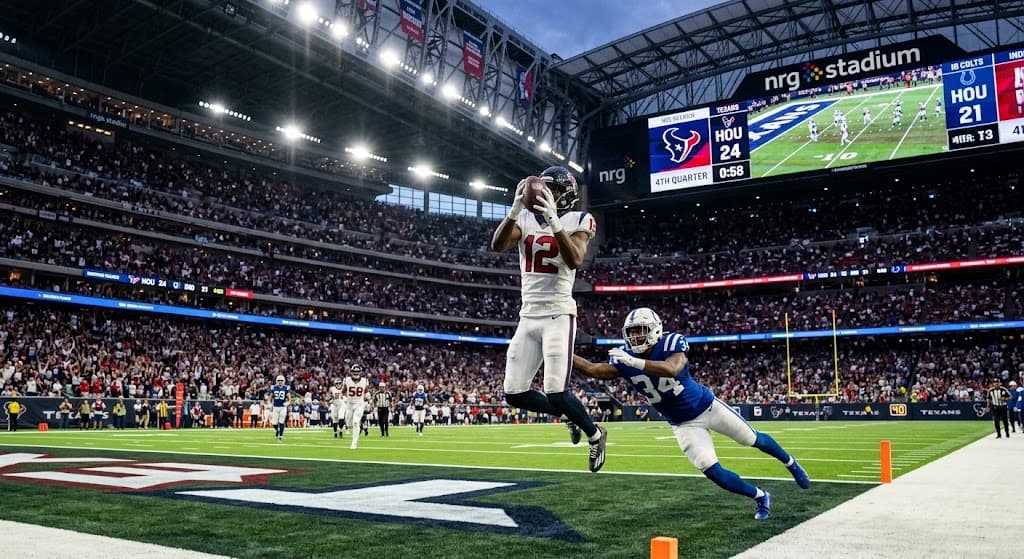
Meanwhile, on your television screen across the room, a college football team punches the ball into the endzone with forty seconds left on the clock. You know the score. The stadium knows the score. The entire internet knows the score.
Yet your bids, placed minutes earlier when the outcome was still uncertain, are sitting completely frozen inside an unresponsive order book, waiting to be executed by predatory automated bots the millisecond the servers reconnect.
That was the terrifying reality for tens of thousands of active traders on Saturday, September 19, 2026.
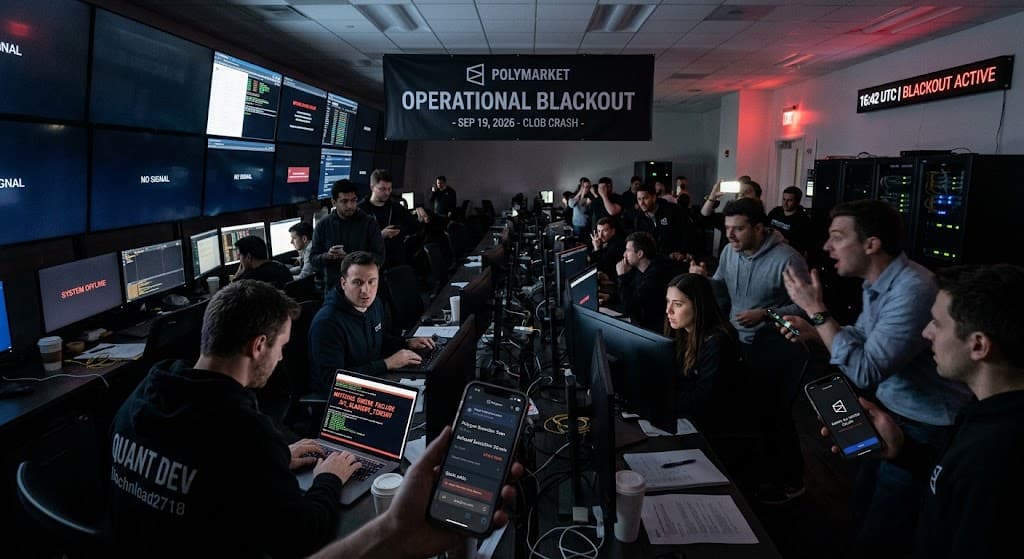
Polymarket, the undisputed king of decentralized prediction markets, suffered a devastating, multi-hour operational blackout. The platform’s Central Limit Order Book (CLOB) completely collapsed, locking traders out of their capital, delaying on-chain executions by nearly twenty minutes, displaying terrifying phantom account balances, and mistakenly resolving major markets on human clerical errors.
For an industry trying to prove that decentralized event contracts are ready to replace traditional Wall Street exchanges and multi-billion-dollar sportsbooks, Saturday was a harsh, undeniable reality check.
The Anatomy of the Blackout (16:40 to 20:10 UTC)
To understand how the crisis unfolded, you have to look at the operational timeline. Saturday was not an ordinary trading day; it was the centerpiece of Polymarket’s heavily marketed "Zero-Fee Sports Weekend."
With fees completely eliminated across major college football matchups and European soccer derbies, retail liquidity poured onto the platform at record levels. The order books were packed with active bids and offers.
Then, at approximately 16:40 UTC, the machine stopped breathing.
+-----------------------------------------------------------------------+
| TIMELINE OF THE SEPTEMBER 19 OUTAGE |
+-----------------------------------------------------------------------+
| 16:40 UTC: The CLOB matching engine freezes. Orders hang in limbo. |
| 17:58 UTC: Staff member skulldoom97 enables "cancel-only" mode. |
| 18:55 UTC: First recovery attempt fails; Polygon network incident hits|
| 20:10 UTC: Trading finally resumes after nearly 3.5 hours of chaos. |
+-----------------------------------------------------------------------+
Traders suddenly realized their screens had turned into static pictures:
New limit orders were not being accepted by the API.
Open resting orders could not be modified or canceled.
The visual user interface stopped updating price ticks.
Traders who submitted market orders were met with spinning wheels and silent timeouts.
For nearly an hour and twenty minutes, the trading public was left completely blind. Thousands of open orders hung suspended in digital space while live athletic games continued in the physical world.
It was not until 17:58 UTC that a platform staff member named skulldoom97 stepped into the community channels to announce that the exchange had been placed into "cancel-only mode." The team promised a five-minute advance warning before full trading would be re-enabled.
At 18:55 UTC, platform representative pmkeaton announced that trading was being restored.
Traders breathed a collective sigh of relief and rushed to their keyboards. But that relief lasted less than two minutes.
Almost immediately after the restart, the platform plunged into a second blackout. This time, pmkeaton attributed the collapse to an external infrastructure breakdown: an underlying incident on the Polygon blockchain network that choked transaction settlement.
It took until roughly 20:10 UTC, nearly three and a half hours after the initial failure, for the matching engine to slowly recover and resume stable order processing. Throughout the entire ordeal, staff members tsmultra and iflexson confirmed that engineering teams were frantically working behind the scenes, but for many participants, the damage was already done.
Human Cost
In a traditional financial market, when an exchange matching engine fails, trading halts universally for everyone. Nobody can buy, nobody can sell, and no orders can cross the tape until the bell rings again.
On a hybrid decentralized exchange like Polymarket, the breakdown created a much more dangerous phenomenon: the trapped exit door.
Consider what happened to everyday users who had placed trades right before the freeze.
Multiple traders reported that their taker orders, intended for short-term fifteen-minute windows, were heavily throttled by the system. Then, during the height of the outage, those throttled orders mysteriously executed against order books for windows that had already closed.
A trader known as berth6833 shared on-chain transaction data revealing that order fills were landing on the Polygon blockchain with an astounding twenty-minute delay.
THE DELAYED EXECUTION TRAP:
1. You place an order to hedge an active game at 16:41 UTC.
2. The browser interface says "Pending" and appears to time out.
3. The real-world outcome changes; your position becomes worthless.
4. The system executes your order on-chain 20 minutes later at stale odds.
5. Your money is gone before you even receive a confirmation.
Think about the psychological panic that creates.
If you bought contracts before the outage and wanted to exit your position to lock in a profit or cut a small loss, you were physically locked out of the software. You sat in your chair, watching the clock tick, unable to sell.
In the official discussion channels, a desperate user asked a direct question: If you bought shares before the servers broke and were physically prevented from selling while the market turned against you, would your losses be refunded?
In a response that sent shockwaves through the community, pmkeaton and fellow team member suhailkakar confirmed that refunds will indeed be issued for losses incurred as a direct result of the outage. By acknowledging that inability to sell constitutes a qualifying loss, Polymarket leadership took on a massive administrative and financial restitution challenge.
The Cascade of Glitches
The matching engine failure was only the headline act. As the platform struggled to right itself on Saturday evening, a chaotic cascade of secondary software bugs began detonating across the platform.
1. The Phantom PnL Charts
Traders logged into their dashboards only to feel their hearts leap into their throats. Profit and loss (PnL) portfolio charts were displaying wild, erratic curves featuring giant, artificial peaks and catastrophic multi-thousand-dollar drops that did not reflect actual account values.
A user could refresh the page and see their account drop by eighty percent, only to refresh again and see a fake surge. Platform staff member 0xdanzu had to publicly step in to reassure terrified users, explaining that historical stats and position data had gone stale as the team rolled out a brand-new data API behind the scenes.
2. The Unsorted Order Book Disaster
For automated algorithmic traders and quantitative developers, a far more alarming bug was uncovered in the application programming interface (API).
Developer fargason_ pointed out that the public API endpoint responsible for returning the order book bids and asks was not sorting prices correctly, despite official documentation explicitly guaranteeing that the best available prices would always be delivered first.
Automated market-making bots rely on sorted order books to calculate spreads and quotes. When the API returns an unsorted array, an automated algorithm can easily miscalculate the fair price, firing bad trades into the book. When confronted with the issue, developers were simply advised not to rely on guaranteed ordering in production.
3. The Broken Rewards System and The "Obsidian" Bug
Meanwhile, user tuesday3329 documented that the platform's primary rewards portal had failed to load entirely, preventing active participants from tracking their volume incentives.
Even crazier: users votobias_12985 and phoenyx69 revealed that the exchange’s prestigious "Obsidian Tier" VIP status, a rank legally reserved for high-volume whales who trade at least $10 million in weighted volume, was accidentally granted to accounts with barely $200,000 in volume. The platform’s internal tracking metrics had temporarily lost their baseline.
+---------------------------------------------------------------+
| THE SATURDAY CASCADE OF PLATFORM GLITCHES |
+---------------------------------------------------------------+
| 1. Matching Engine Blackout: 3.5 hours of frozen trading. |
| 2. Execution Lag: Fills landing on-chain 20 minutes late. |
| 3. Phantom Balances: Wild, fake account dips and spikes. |
| 4. API Book Bug: Best bids and asks returned unsorted. |
| 5. VIP Glitch: $10M Obsidian ranks handed to $200k traders. |
| 6. Market Error: Esports MVP market resolved to wrong winner. |
+---------------------------------------------------------------+
The League of Legends Fiasco (How Caliste Got Robbed)
As if the technical infrastructure collapse was not enough, Saturday delivered an embarrassing reminder of human operational vulnerability.
In the competitive gaming category, thousands of dollars had been wagered on the LEC Summer Split 2026 Most Valuable Player market. The award was officially announced, and an elite player named Caliste won the trophy fair and square.
Traders who held "Caliste" shares celebrated, waiting for their payout.
Instead, the market contract officially resolved to: "Other."
Traders looked at their screens in utter disbelief. The actual winner of the award had been listed on the ballot, yet the contract resolved to the catch-all category, instantly zeroing out the winning accounts and paying out the wrong side.
Platform developer 0xdanzu was forced to return to the community forums to confess what had happened: it was a pure deployment mistake. A staff member had entered the wrong expiration end date into the market configuration, causing the automated settlement logic to trigger incorrectly. The team promised that the market operations desk would manually issue full refunds to all affected users.
It was a stark reminder: even when the server processors are running, prediction markets remain vulnerable to simple human typos.
The Underlying Engineering Truth (Why Did the Engine Break?)
Why did the world’s most famous prediction market buckle so completely on a sunny Saturday in September?
In the trading channels, community members quickly connected the dots: the zero-fee sports promotion created a volume tsunami that the matching engine was never designed to carry.
Unlike traditional crypto automated market makers (like Uniswap), where trades are processed slowly block-by-block on the blockchain, Polymarket operates an off-chain Central Limit Order Book.
The orders are matched off-chain on centralized servers for speed, and then batched and settled on the Polygon blockchain for custody.
When you eliminate trading fees during a weekend packed with Premier League soccer and American college football, you invite high-frequency market-making algorithms to quote aggressively on every single play, kick, and down.
Every tiny change on the football field generates hundreds of new limit orders, cancellations, and spread updates. The volume of incoming messages spikes from thousands per minute to tens of thousands per second.
In the middle of the crisis, community member shy_blue_rock revealed that the engineering team is currently in the middle of completely rewriting the core matching engine from scratch. User ravdes21 circulated public posts from lead developer Josh Stevens confirming that a major architectural overhaul is actively underway.
The platform was caught in the worst possible engineering scenario: running a promotional traffic surge on an older matching engine that was already scheduled for replacement. When the message queue backed up, the system choked, order processing halted, and the downstream blockchain bridge collapsed under the weight of delayed settlements.
The Missing Feature
In the aftermath of Saturday’s disaster, veteran traders and quant developers began demanding the implementation of an industry-standard safety feature that Wall Street and centralized crypto exchanges adopted years ago: Cancel-on-Disconnect (COD).
Prominent community trader verrylowsharpe pointed out a fatal flaw in how Polymarket handles system health.
When the exchange goes down unexpectedly, resting orders remain live in the database. Staff members eventually step in manually to turn on "cancel-only" mode, but that manual process took nearly eighty minutes on Saturday.
Furthermore, platform notifications are often buried in Discord channels or external X accounts, leaving users who do not follow social media completely in the dark. Community member brka directly tagged platform executives, calling for urgent, high-visibility warning banners inside the native trading interface whenever latency spikes.
THE CANCEL-ON-DISCONNECT SOLUTION:
What Happens Now: Matching engine dies ===> Orders stay alive ===> Users get picked off.
What Wall Street Does: Heartbeat fails ===> Server auto-cancels ===> Capital is protected.
In mature financial exchanges like CME, Nasdaq, or Binance, if a client's software loses its heartbeat connection with the exchange, or if the internal matching engine detects an infrastructure pause, the system automatically and instantly cancels all active resting orders.
It does not wait for a human developer named skulldoom97 to wake up, open a terminal, and type a command eighty minutes later.
If prediction markets want to attract institutional liquidity and manage hundreds of millions of dollars in volume, automated safety failsafes must be written into the core server architecture, not handled through ad-hoc social media announcements.
The Hard Reality for Everyday Traders
Saturday's multi-hour blackout on Polymarket provides a vital lesson for anyone participating in the modern digital prediction economy:
Your biggest risk in trading is rarely the market; your biggest risk is the plumbing.
You can analyze college football statistics with perfection. You can study order book depth and funding rates for hours. You can make the absolute correct call on who will win the game.
None of that helps you if the platform’s matching engine freezes the moment you try to take your profit, or if your pending cancel request sits dead in a server queue while an on-chain bot picks off your stale bids twenty minutes late.
Polymarket deserves credit for stepping up, acknowledging the failure, and promising comprehensive refunds for users who suffered losses during the blackout. Very few traditional platforms would offer that level of restitution.
However, promises of refunds cannot replace structural reliability.
As prediction markets accelerate toward mainstream adoption, the battle will not be won by who has the flashiest sports marketing promotions or who offers zero fees on game day.
The battle will be won by the platform that can keep its servers alive when the stadium stands on its feet, the final whistle blows, and the entire world rushes to click the button at the exact same millisecond.
Until those rewritten matching engines go live, keep your order sizes disciplined, keep your social media feeds open, and never assume that the red button on your screen is guaranteed to work when the building starts to shake.
Rate this piece — one tap, no signup
Editor-in-Chief
Ezekiel Njuguna is the Editor-in-Chief of Predictions Market Fans, where he helps make probabilistic thinking clear and practical for readers. With a strong focus on quantitative research and market mechanics, he leads the site’s technical guides, including a detailed breakdown of Kalshi Combos. His writing connects economic theory with real-world trading strategy, including practical discussions of how yield-bearing tools can support active bankroll management.
The Weekly Signal
Every Friday — the week's sharpest prediction market analysis, forecasting insights, and data-driven commentary. No noise.
Disclaimer: This content is for informational and educational purposes only. It does not constitute financial advice, investment recommendations, or trading guidance. Prediction market participation involves risk of loss. Always conduct your own research before making any financial decisions.